The orchestra
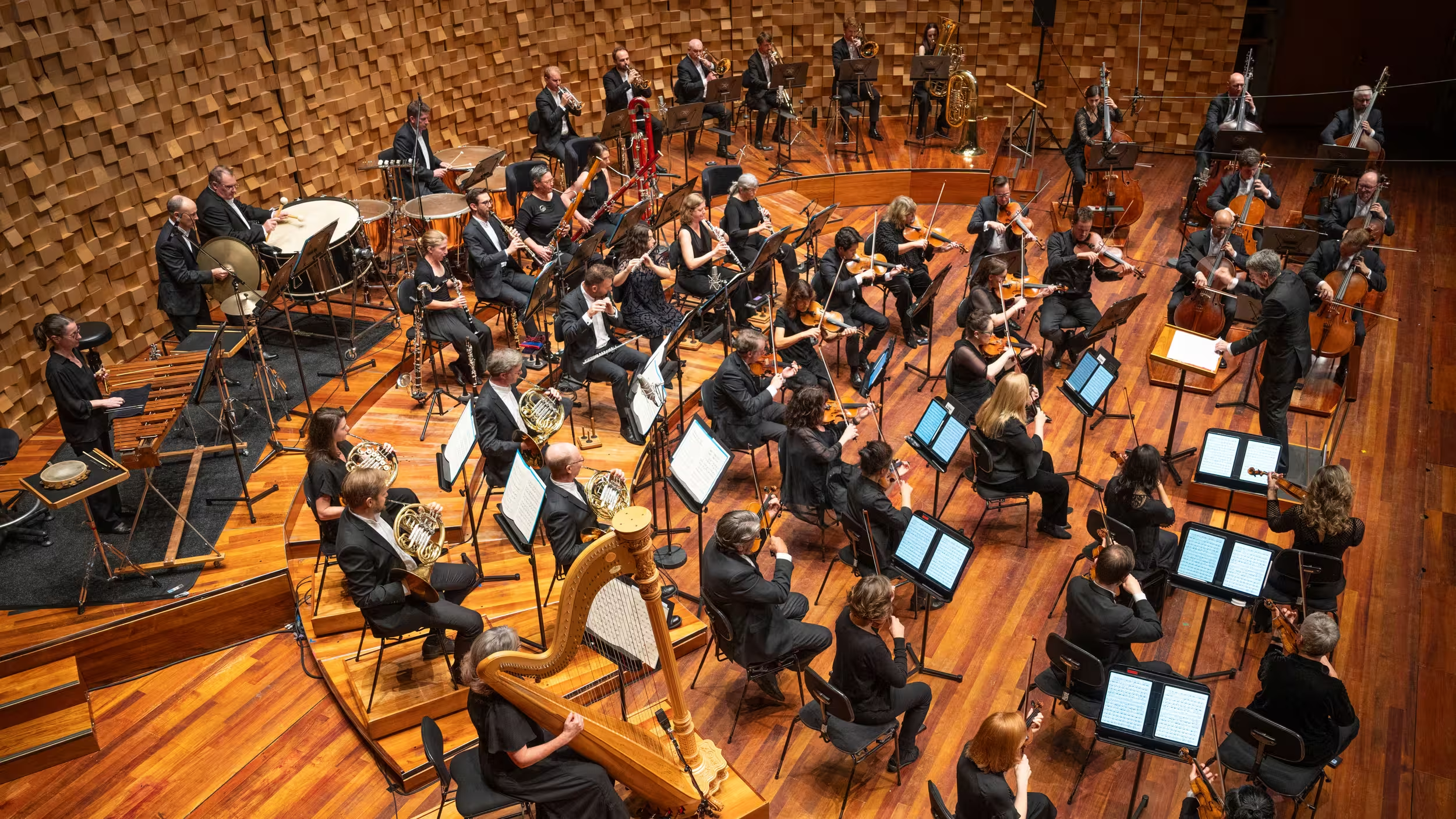
One of the world’s great small orchestras, the Tasmanian Symphony Orchestra performs hundreds of concerts across the state each year. Tasmania’s number one cultural export, the TSO reaches millions of listeners and viewers globally via broadcast and streaming.

47 and more
Our orchestra is made up of 47 full-time, expert musicians who proudly call Tasmania home.
Our home stage
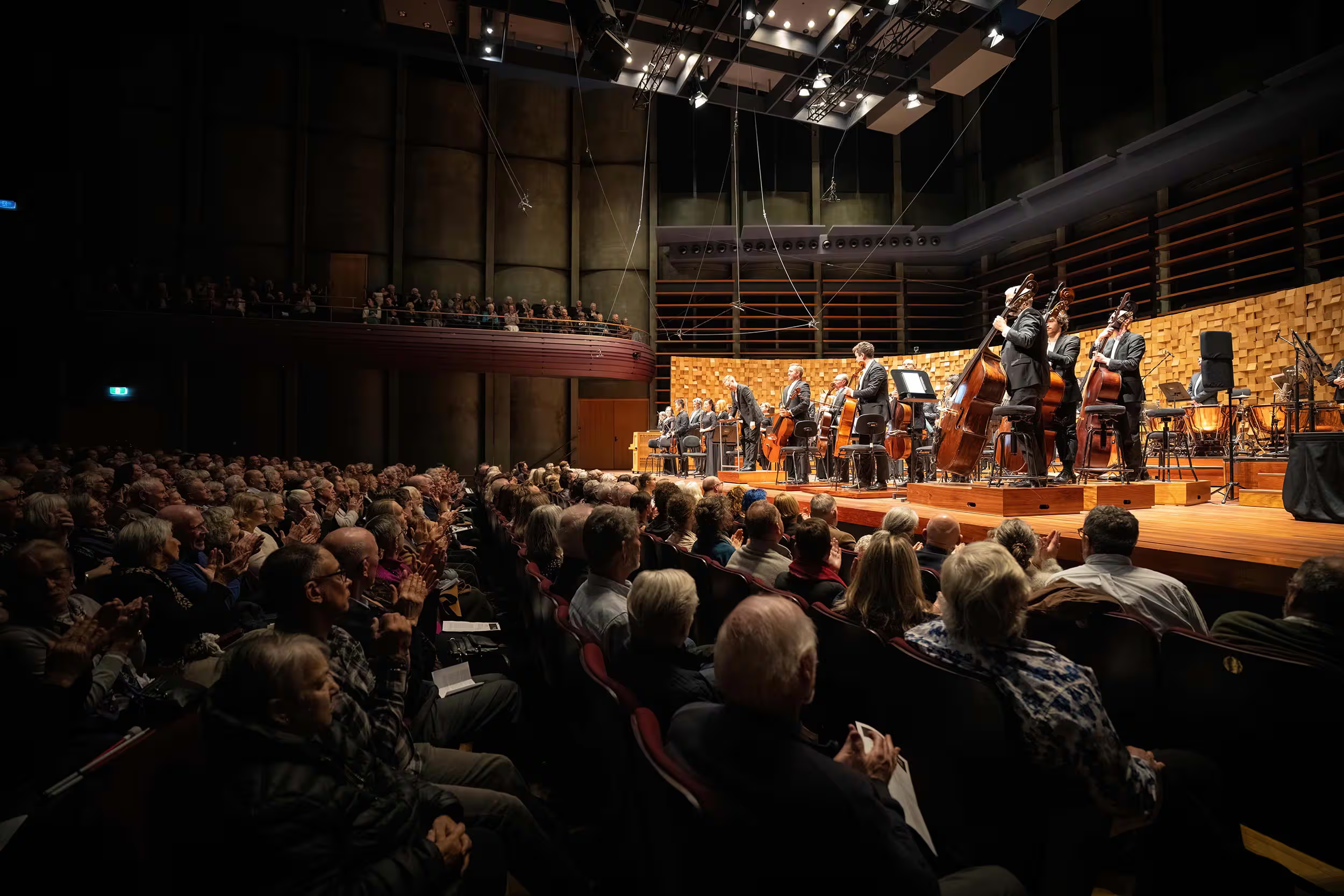
While we call the Federation Concert Hall in Nipaluna / Hobart home, we also regularly perform in St David’s Cathedral in Nipaluna / Hobart and in Launceston’s Albert Hall and Princess Theatre.
We go all over
Our musicians travel year-round, performing in schools, community halls, pubs and other venues across the island.
Recording
Our concert hall is also an international recording hub and we’re the most recorded, broadcast, filmed and streamed orchestra in Australia.
MEET THE ORCHESTRA
Click to see who is part of each section in the orchestra


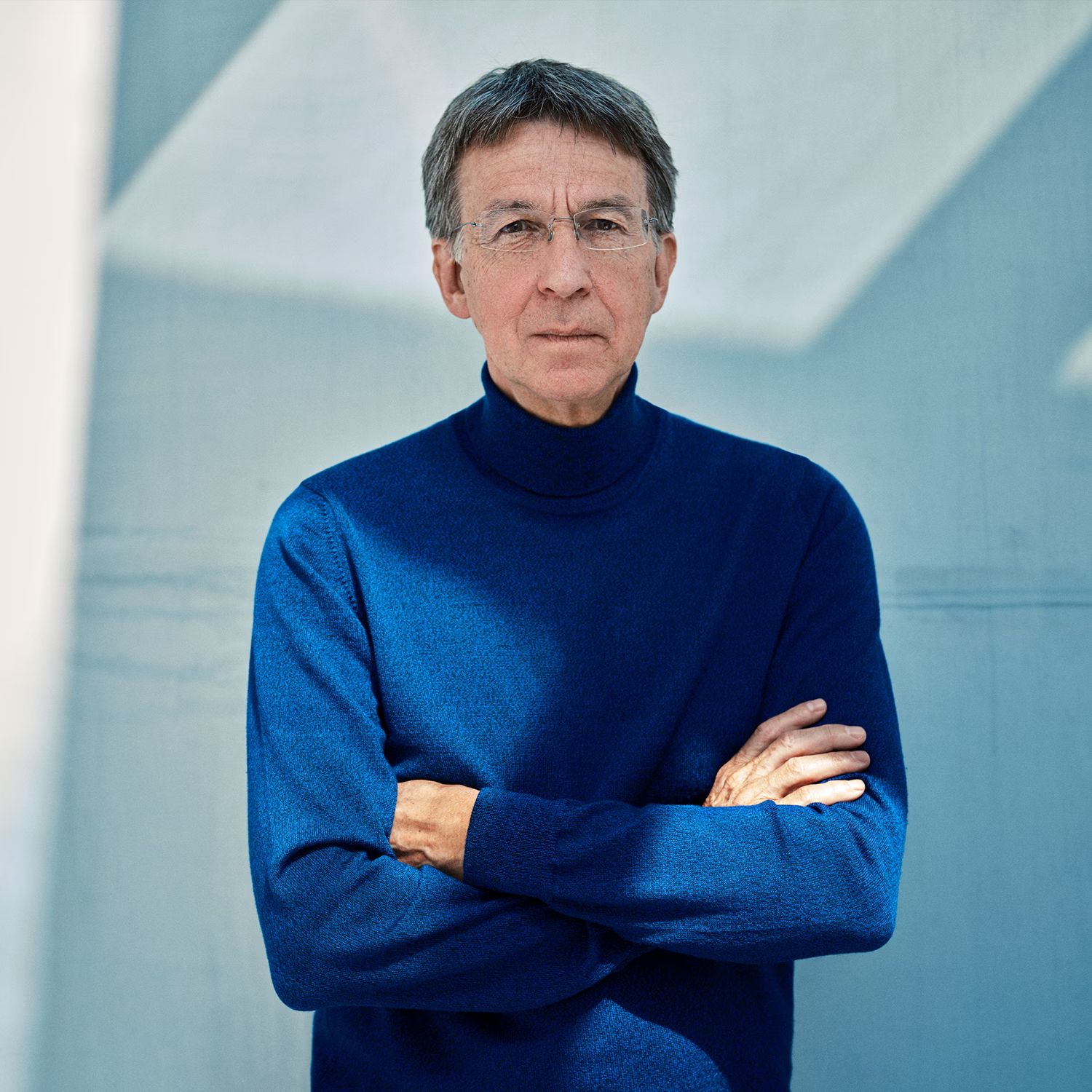
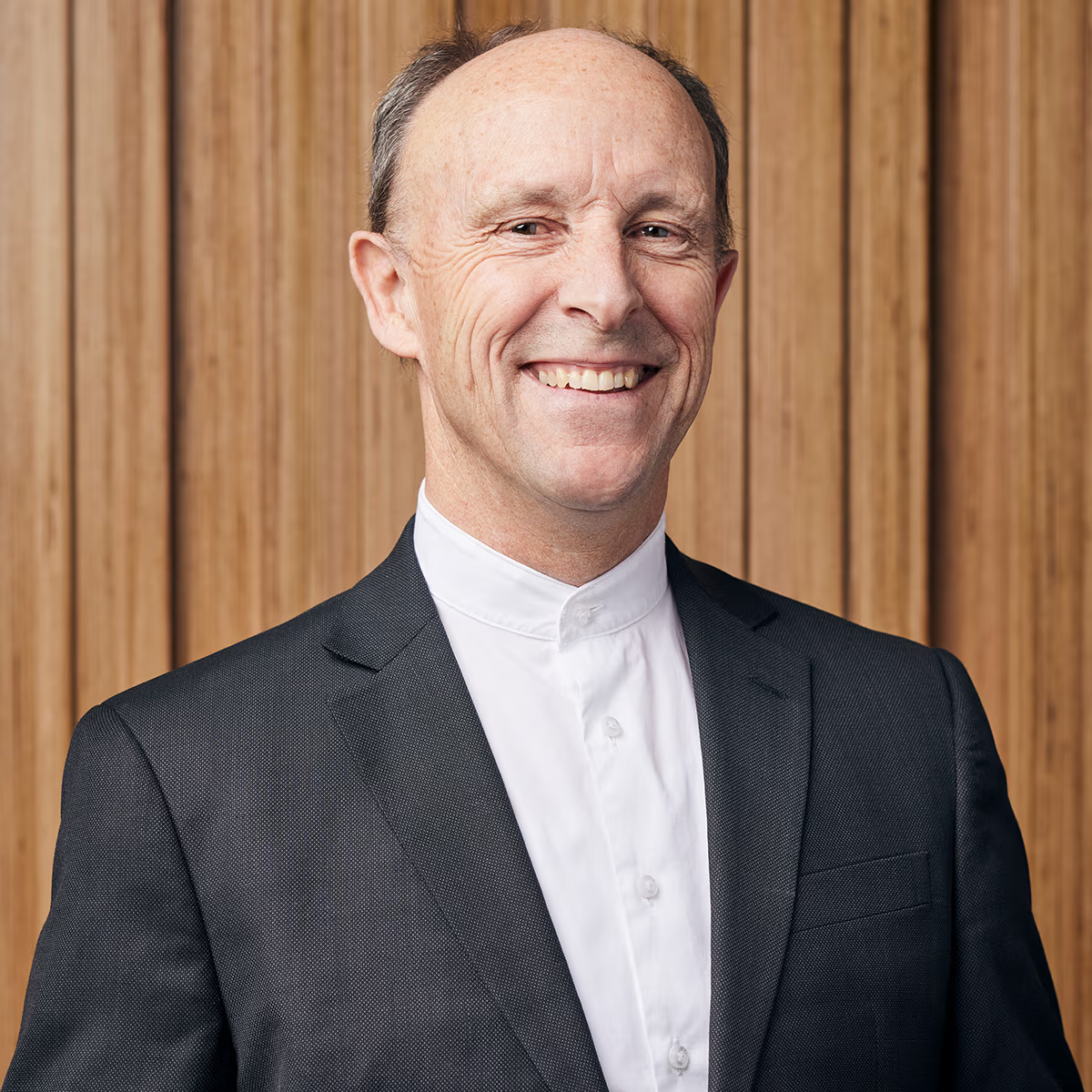
Eivind Aadland
Supported by Anonymous
During performances, the conductor is at the front of the stage facing the orchestra, often standing on a podium. The conductor leads the musicians with hand gestures, full body movement and even facial expression and eye contact.
As our Chief Conductor, Eivind Aadland leads our orchestra by interpreting the music and guiding our musicians during rehearsals and performances. As Artistic Director, he leads the team that decides the music we play, as well as which guest artists and conductors we invite to work with us. He is also responsible for artistic standards and overseeing the artistic vision and creative direction of the orchestra.
We’re joined regularly by acclaimed guest conductors from around the world, each bringing different musical perspectives and expression to our concerts.

Violins make up the largest section of the orchestra and these players are known for their fast-fingered agility, high-pitched virtuosity and ability to create flowing melodies.
Within the violins there are two sections – first violins and second violins, each with distinct roles. The firsts often carry the tune, and the seconds carry the harmony or countermelody.
In many orchestras, violinists only ever play in one section, while at the TSO our tutti violins rotate. As a result, our violinists are uncommonly versatile and flexible.
The violin section is headed by the Concertmaster, who also helps the conductor lead the entire orchestra.
Emma McGrath
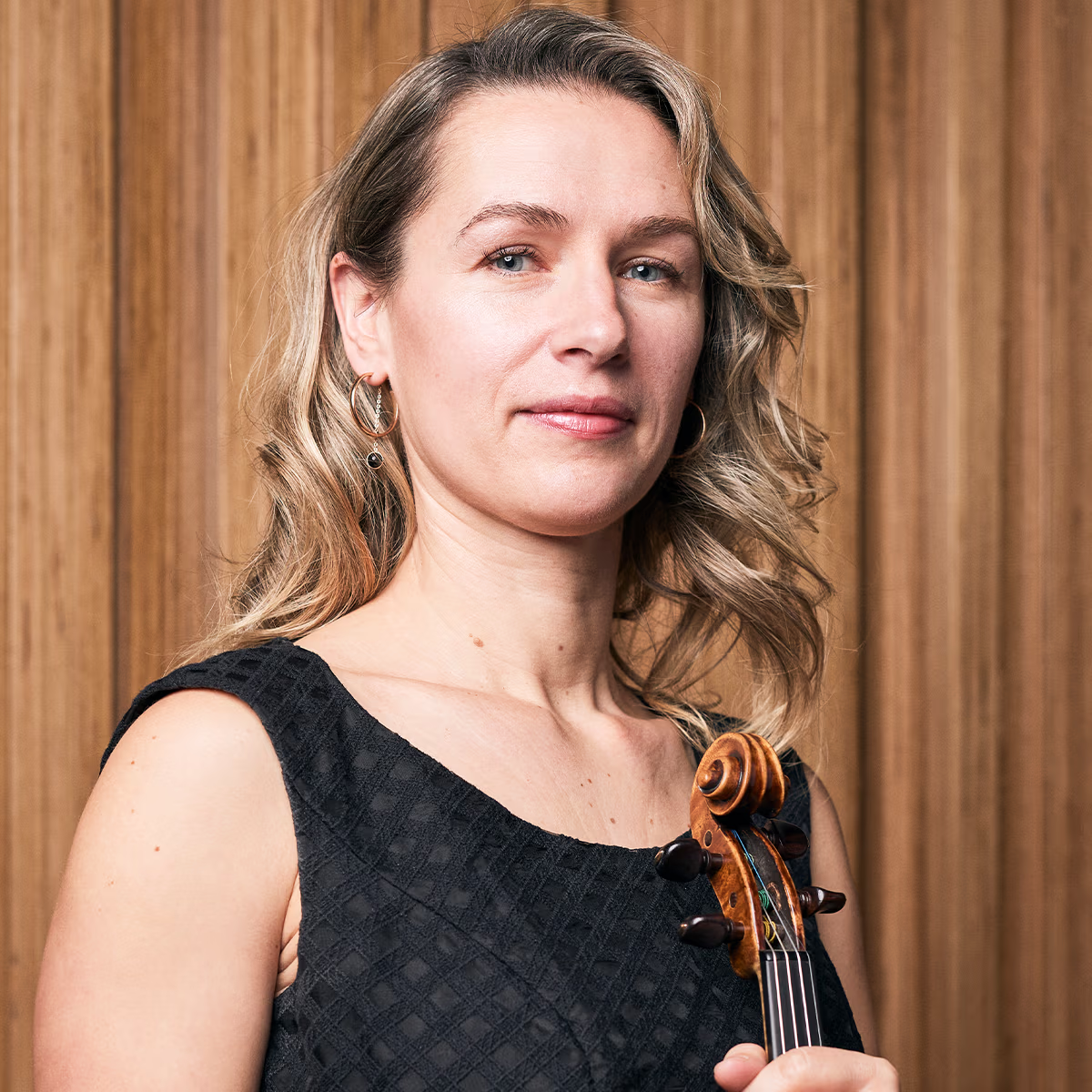
Concertmaster
Supported by Rob and Patricia Greenwell
Ji Won Kim
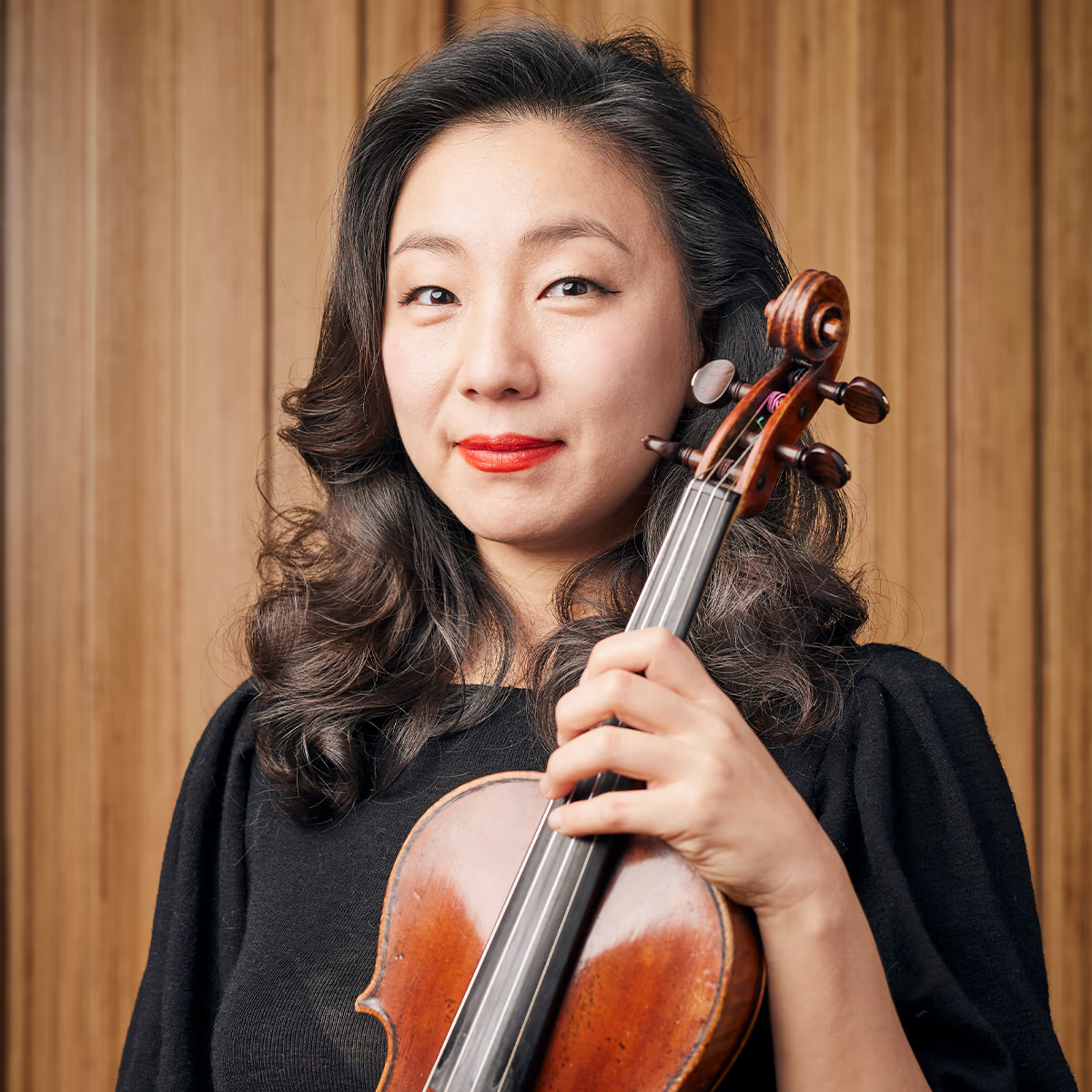
Associate Concertmaster
Lucy Carrig-Jones
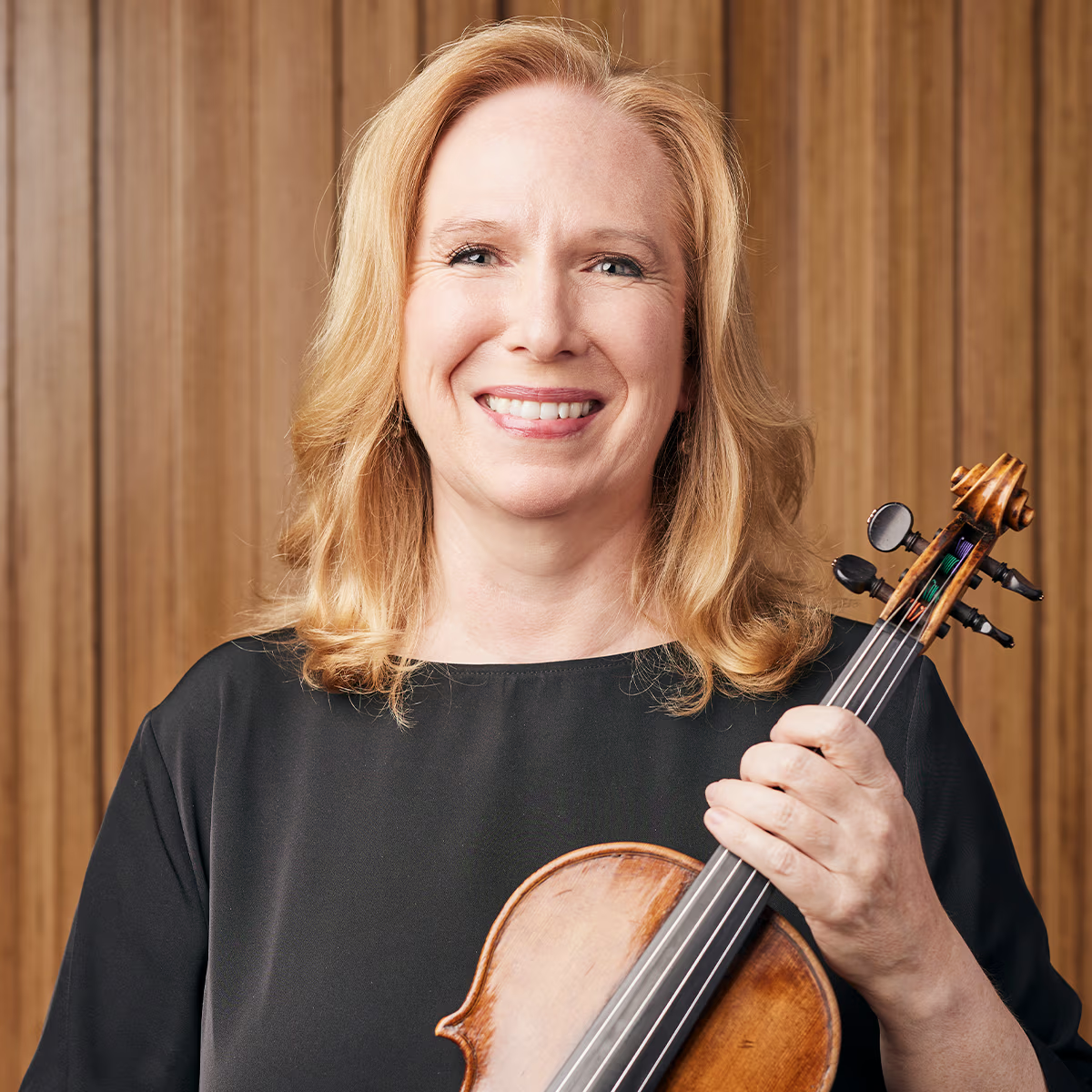
Principal Second Violin
Jennifer Owen
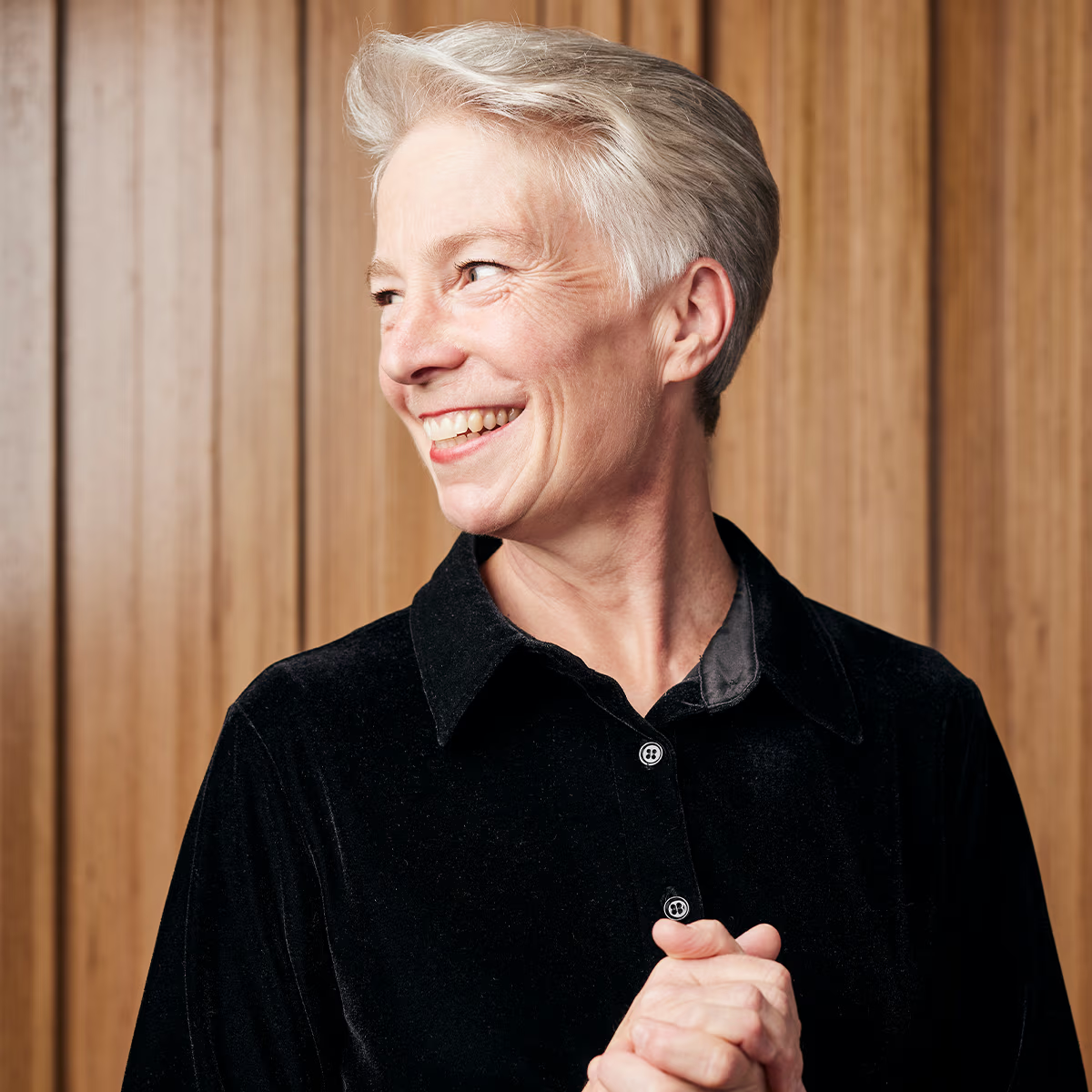
Principal First Violin
Supported by Mountain Air Foundation
Miranda Carson
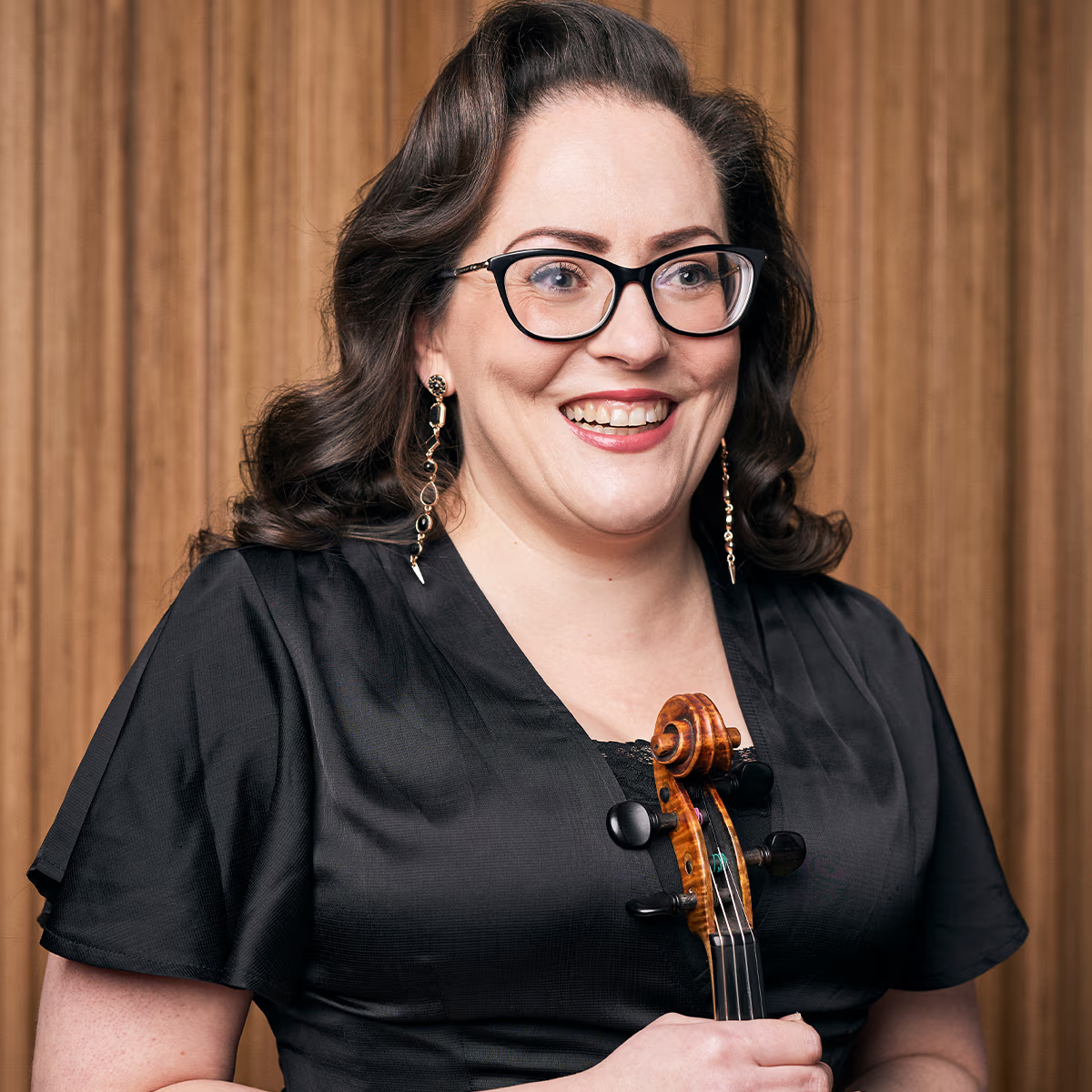
Tutti Violin
Supported in memory of Darrell Jones
Yue-Hong Cha
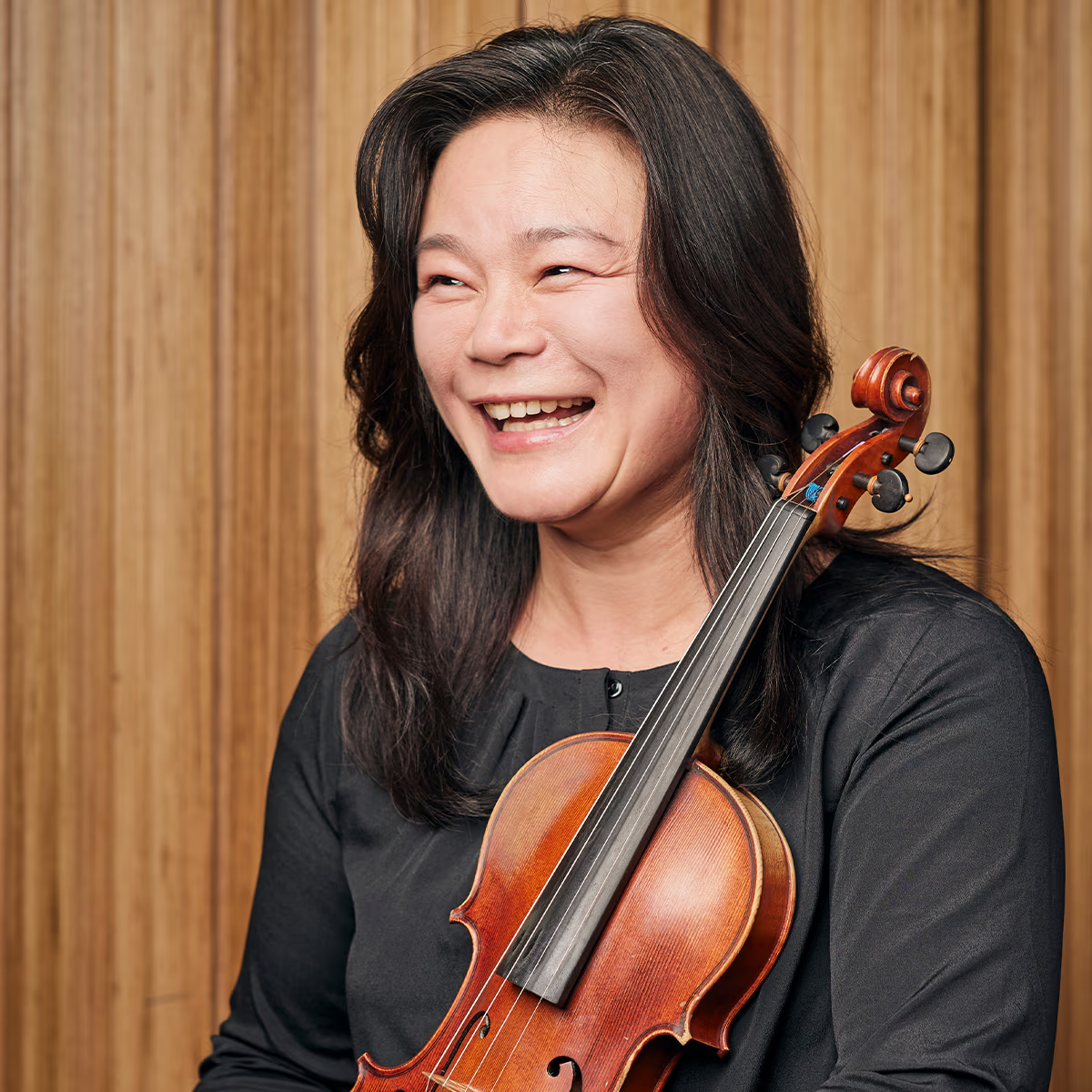
Tutti Violin
Tobias Chisnall
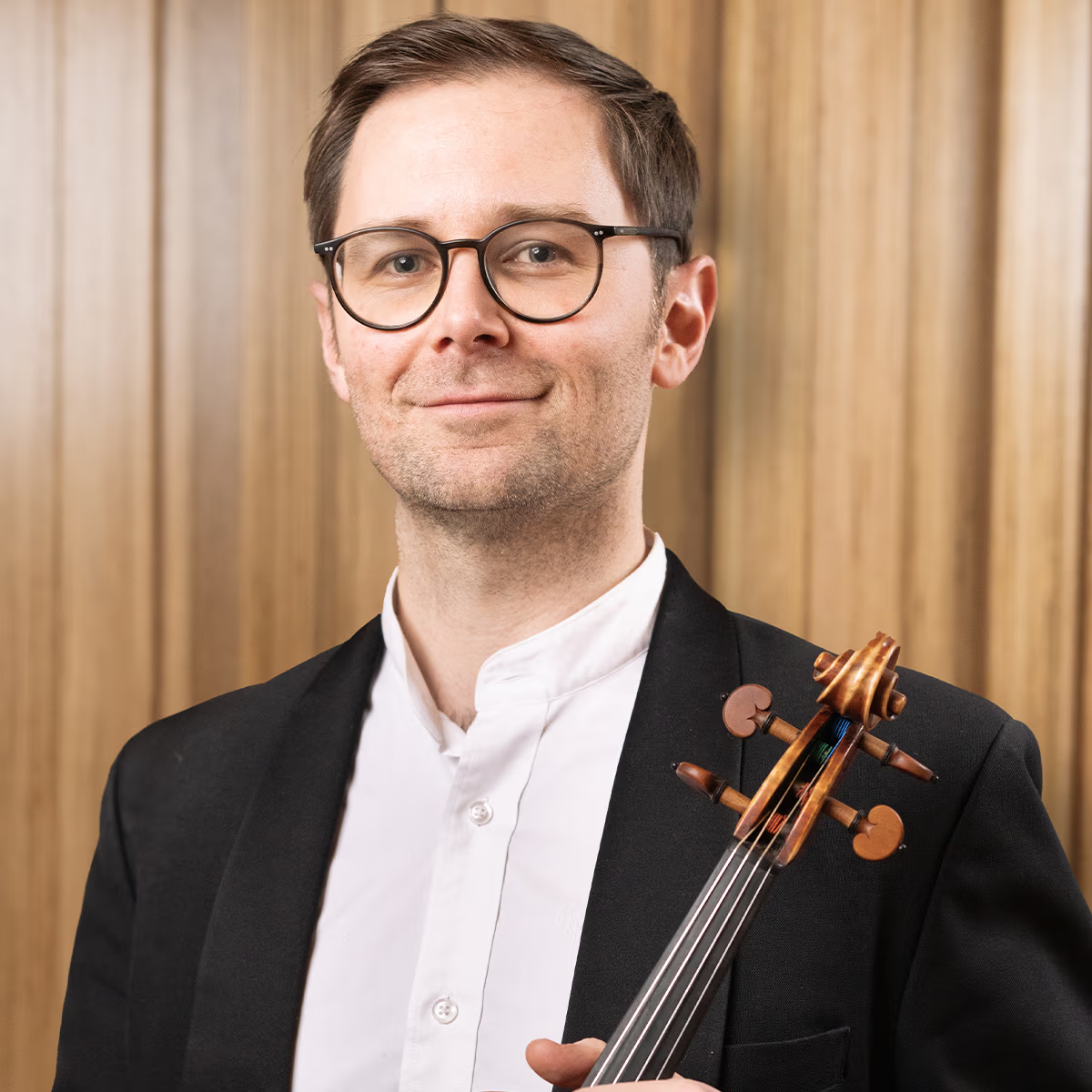
Tutti Violin
Supported by Anonymous
Edwina George

Tutti Violin
Christine Lawson
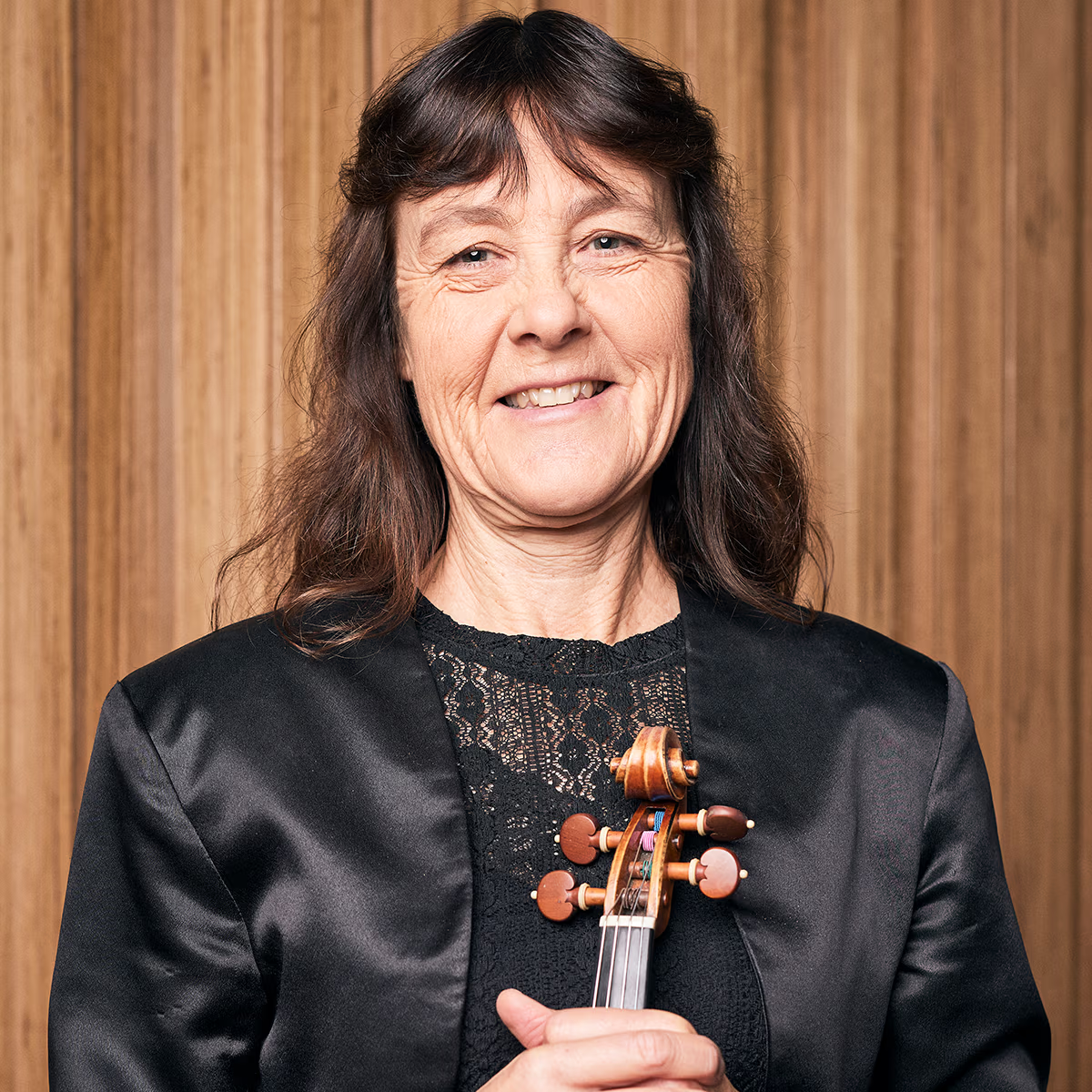
Tutti Violin
Elinor Lea
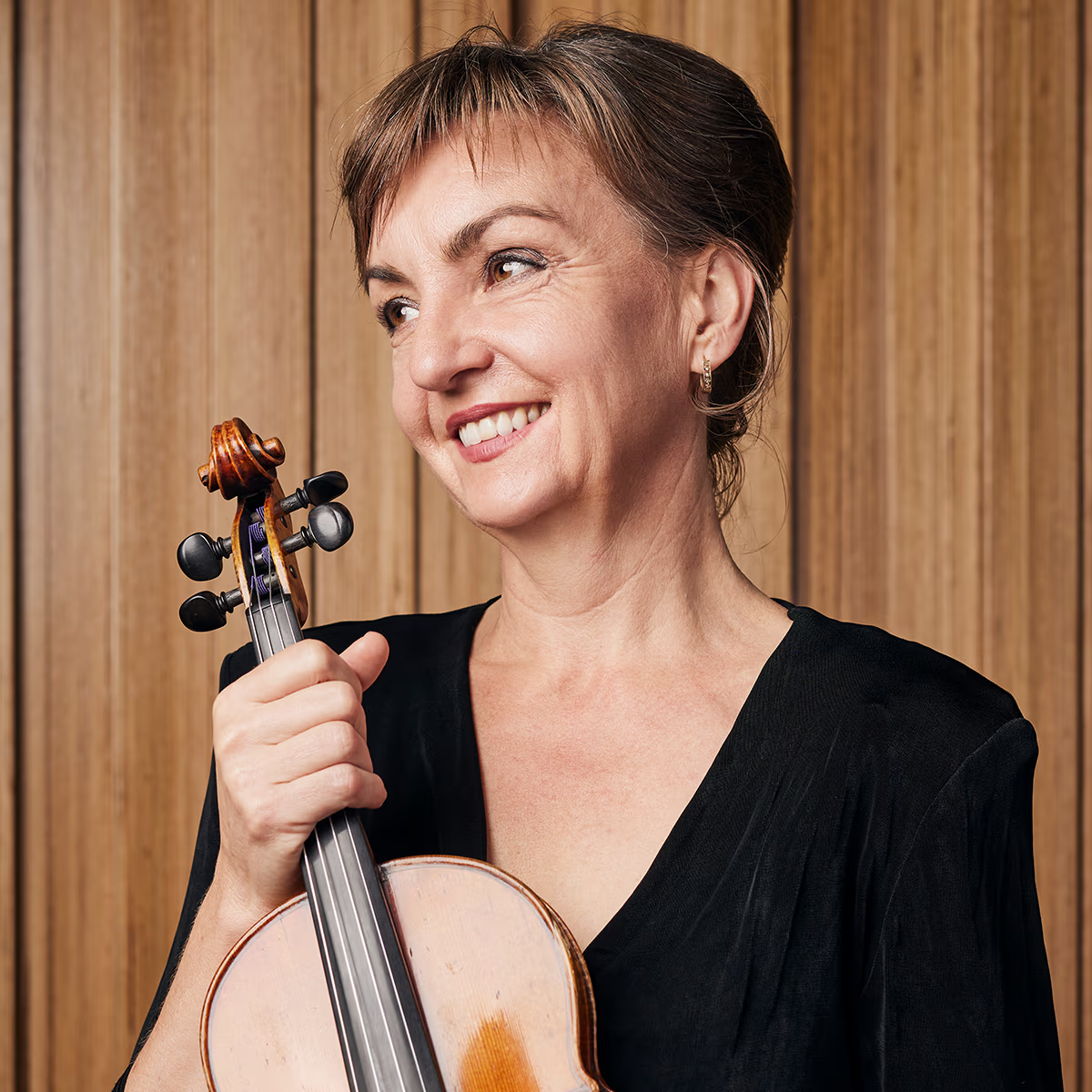
Tutti Violin
Susanna Low
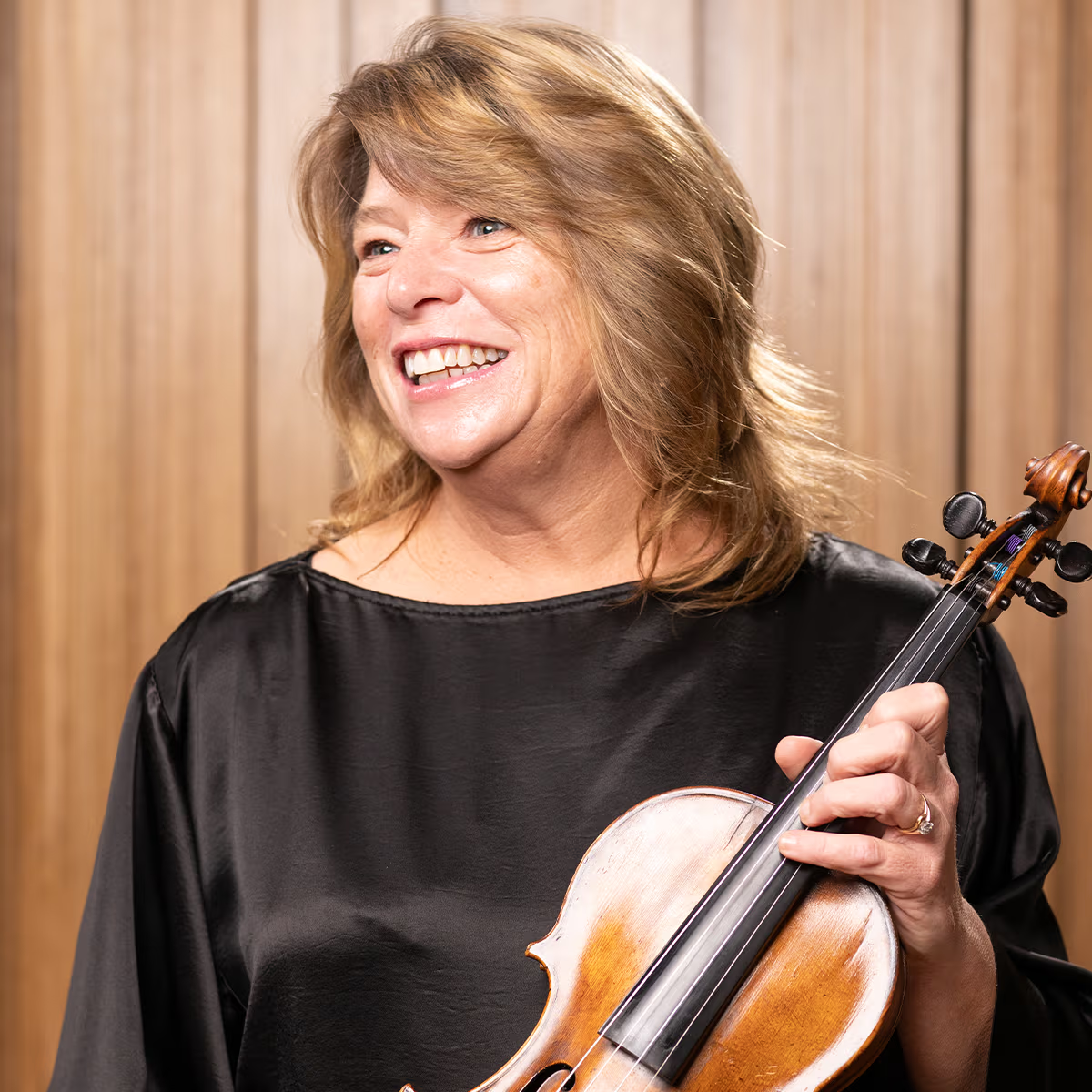
Tutti Violin
Supported by Marc & Susan Duldig & Anonymous
Christopher Nicholas
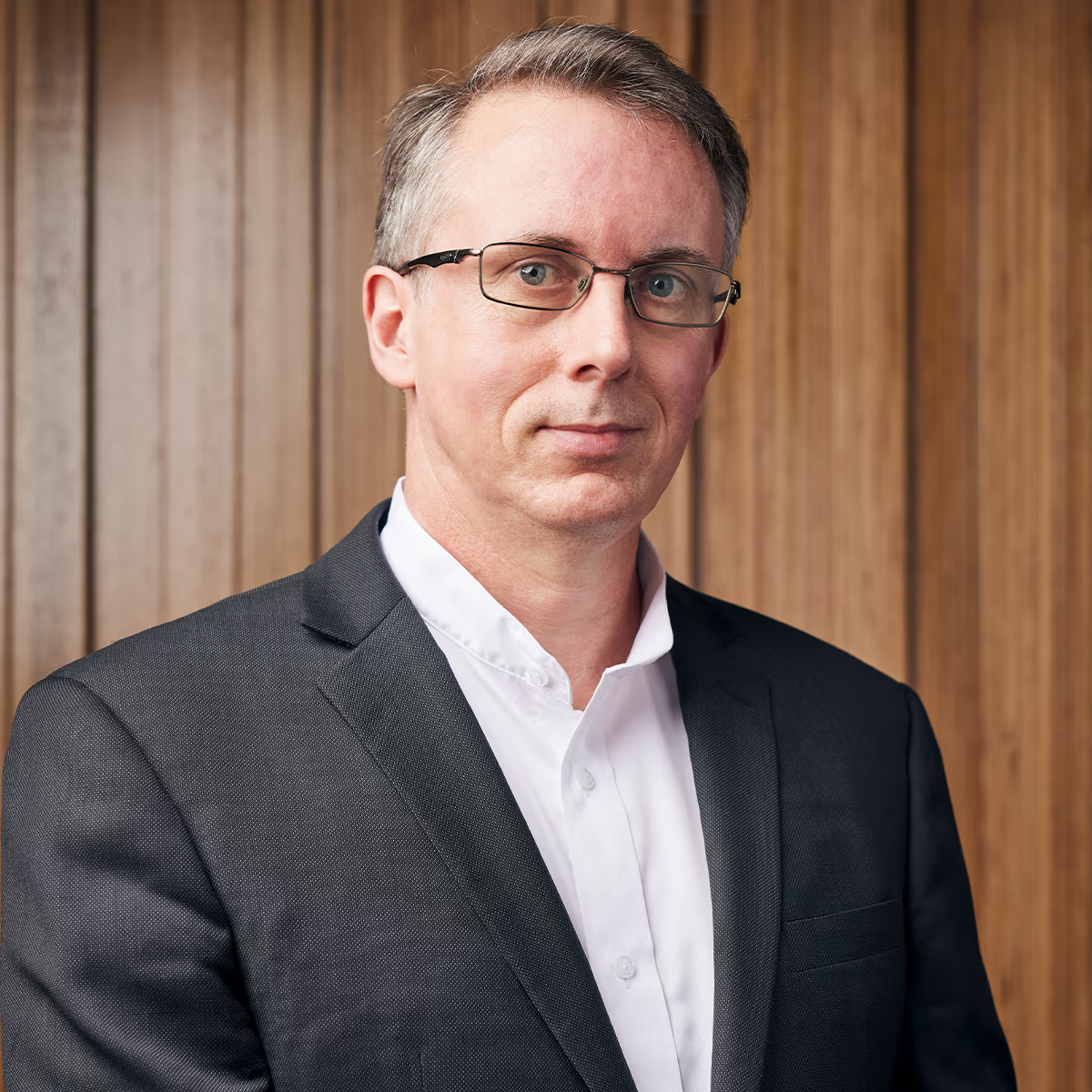
Tutti Violin
Supported by Emeritus Prof Andrew Glenn & Dr Odile Glenn
Rohana O'Malley

Tutti Violin
Vacancy
Tutti Violin

Slightly larger and sitting slightly lower in pitch to the violins, the viola adds depth and resonance to the sound of the smaller strings. Our violists play essential middle harmonies and complete the texture of the orchestra’s sound.
Violas can be brilliant and powerful, but also mellow and warm. Keep an eye and ear out for composers who judiciously choose to feature the violas in meaningful moments when a change in tone and character is required.
Caleb Wright
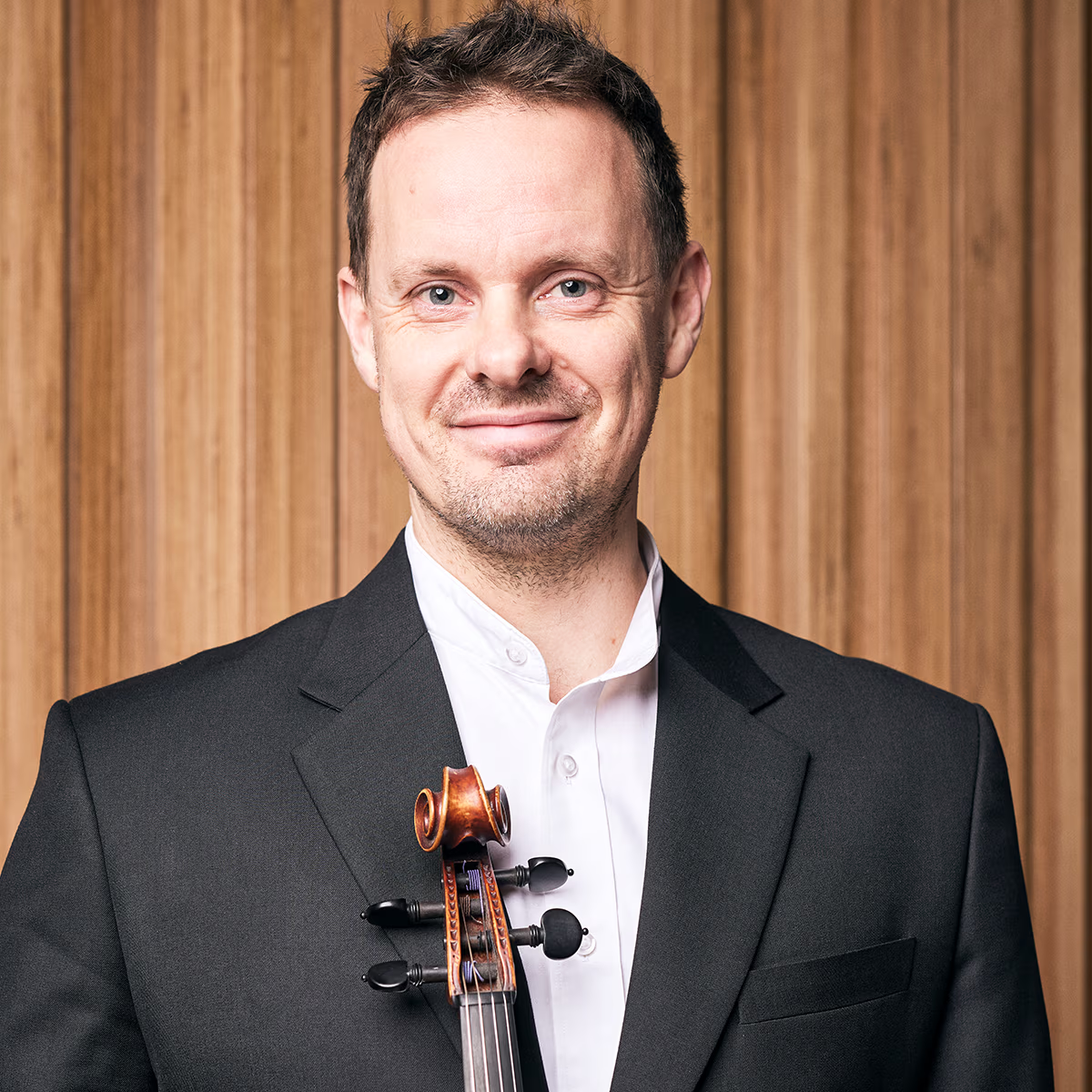
Principal Viola
Douglas Coghill

Tutti Viola
Supported in memory of Margaret Sharpen
Anna Larsen Roach
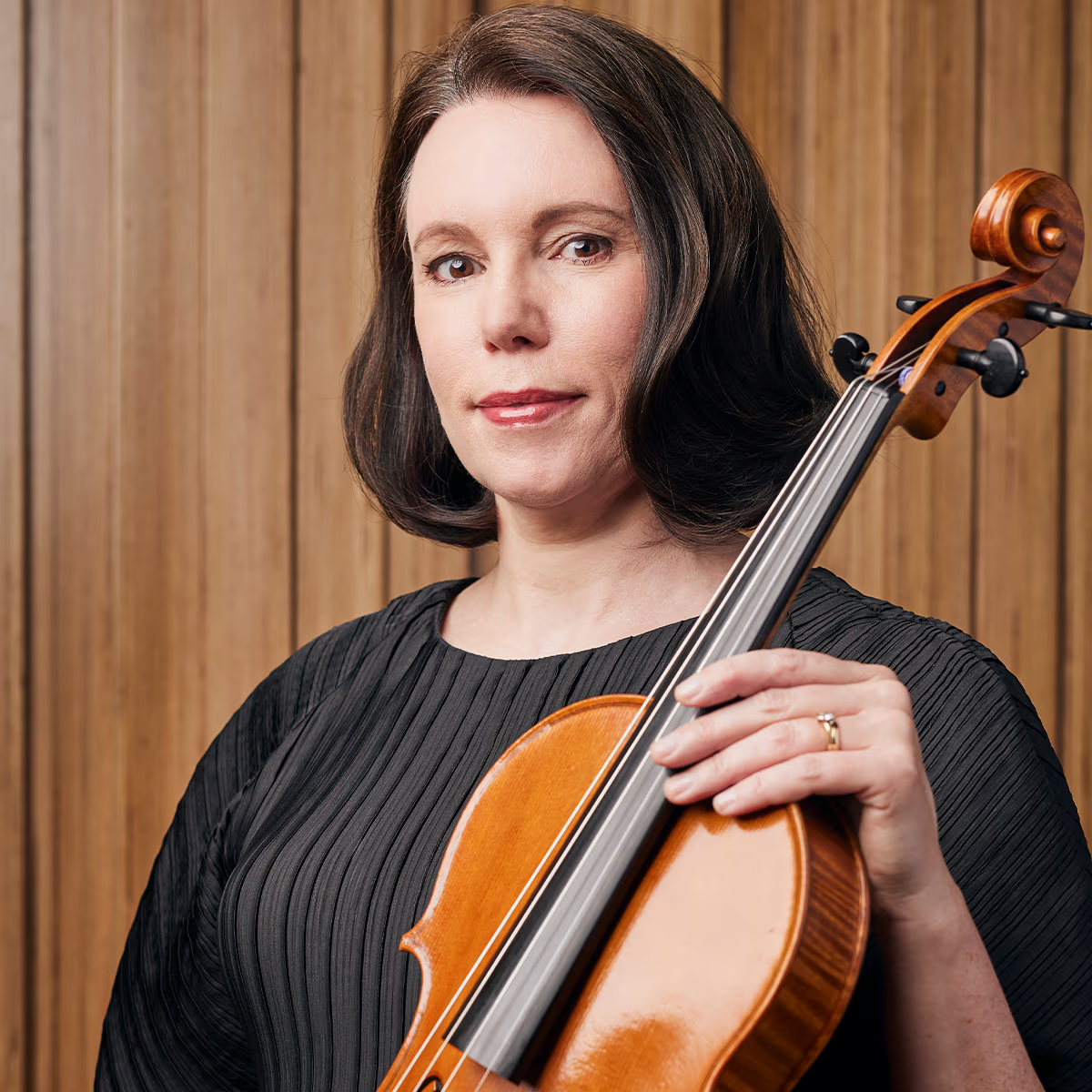
Tutti Viola
Supported by Dr Di Stow
William Newbery

Tutti Viola
Supported by Bill Oakley OAM
Karina Schmitz
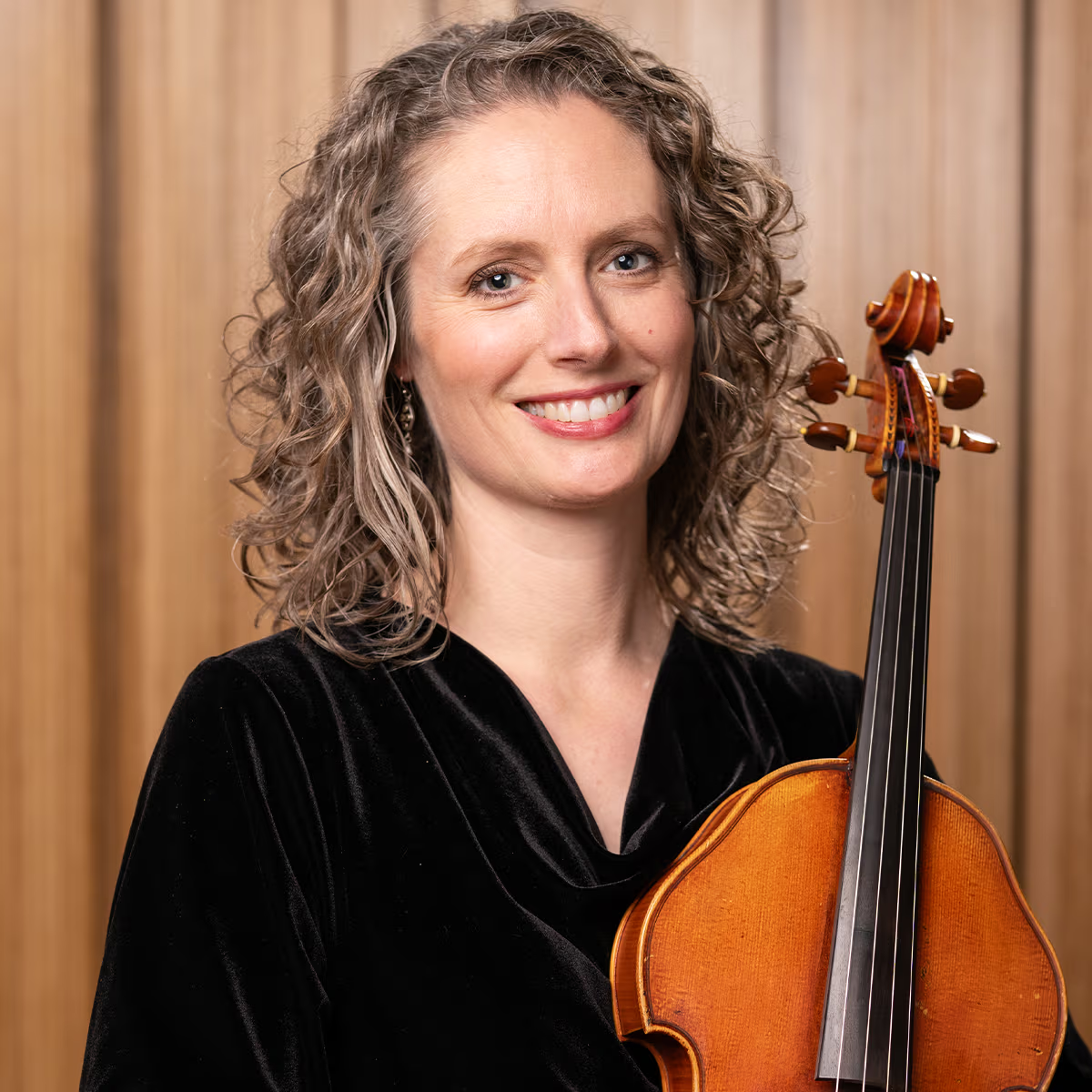
Tutti Viola
The cello (short for violoncello) is the second largest member of the string family. Often described as the closest string instrument to the human voice, the cellos bring warmth, depth, and emotional resonance to every performance. Their rich, expressive sound anchors the orchestra’s harmony and often carries many of its most lyrical moments.
Traditionally seated on the right-hand side of the stage, the cellos create a balanced dialogue with the violins and add a powerful, grounded presence to the overall sound.
Jonathan Békés
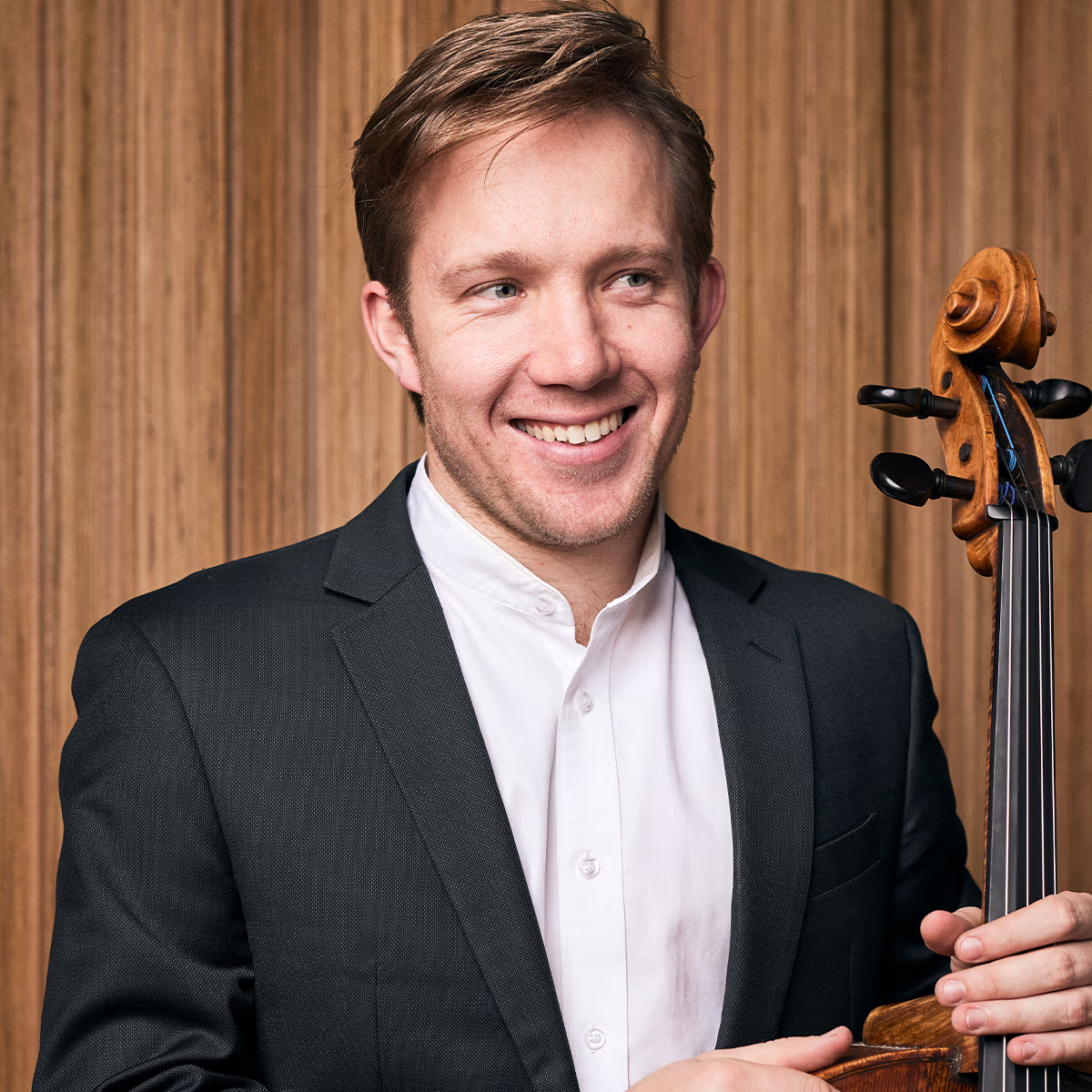
Principal Cello
Supported by Anne & Don Challen AM
Ivan James

Tutti Cello
Supported by Cath Adams & Steve Craft
Nicholas McManus

Tutti Cello
Supported by Anthony J McGee AM
Martin Penicka

Tutti Cello
The largest string instrument, double basses underpin the orchestra’s harmony and provide the deep, warm tone on which the resonance of the entire orchestra depends.
As one of the TSO’s secret weapons, our double bass section provides a clarity of tone that allows the audience to hear every note, and forms the foundation of the music at any given moment.
Double basses may be massive, but if you watch and listen carefully you’ll see how agile these players – and their instruments – are.
Stuart Thomson
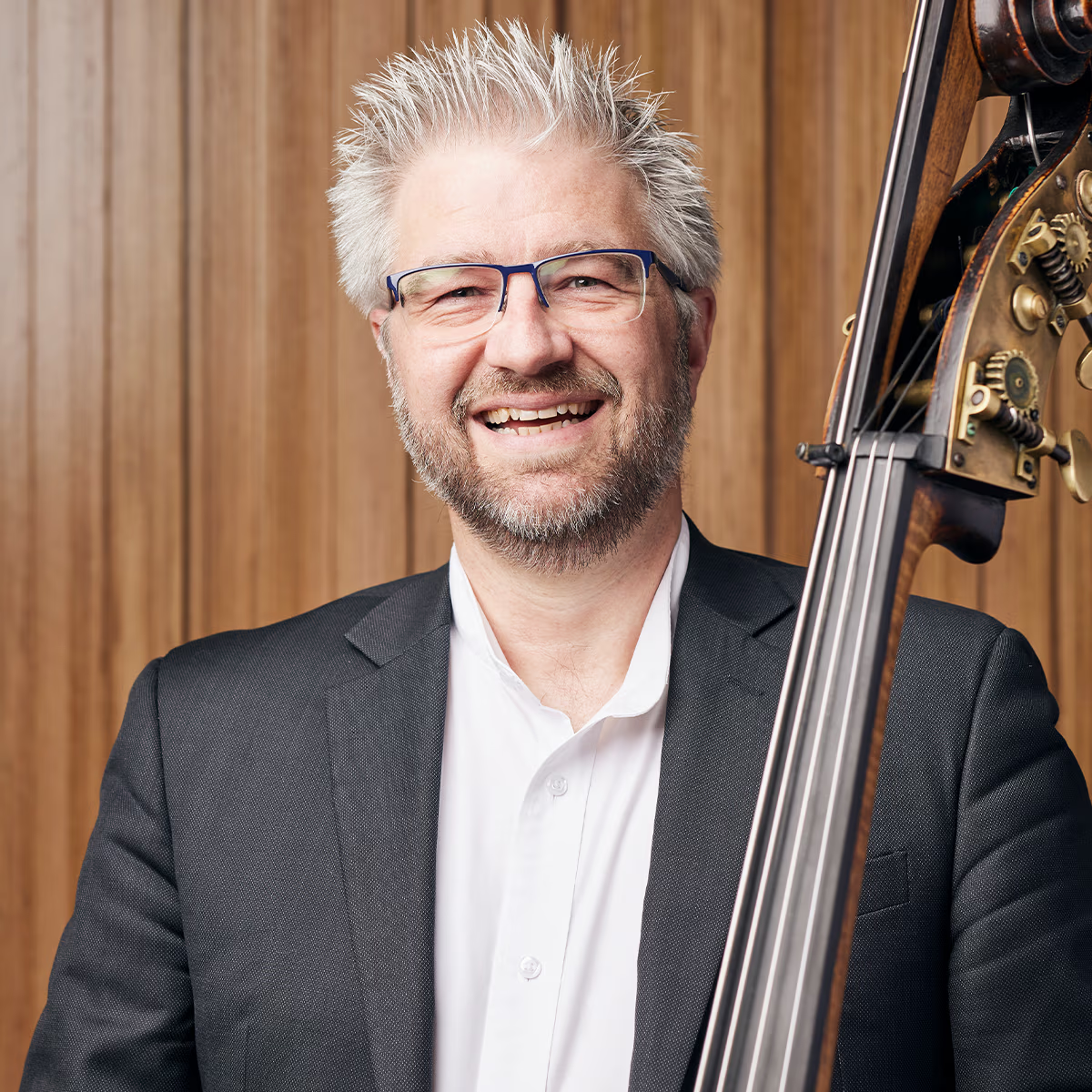
Principal Double Bass
Supported by Patricia Leary
Adrian Whitehall
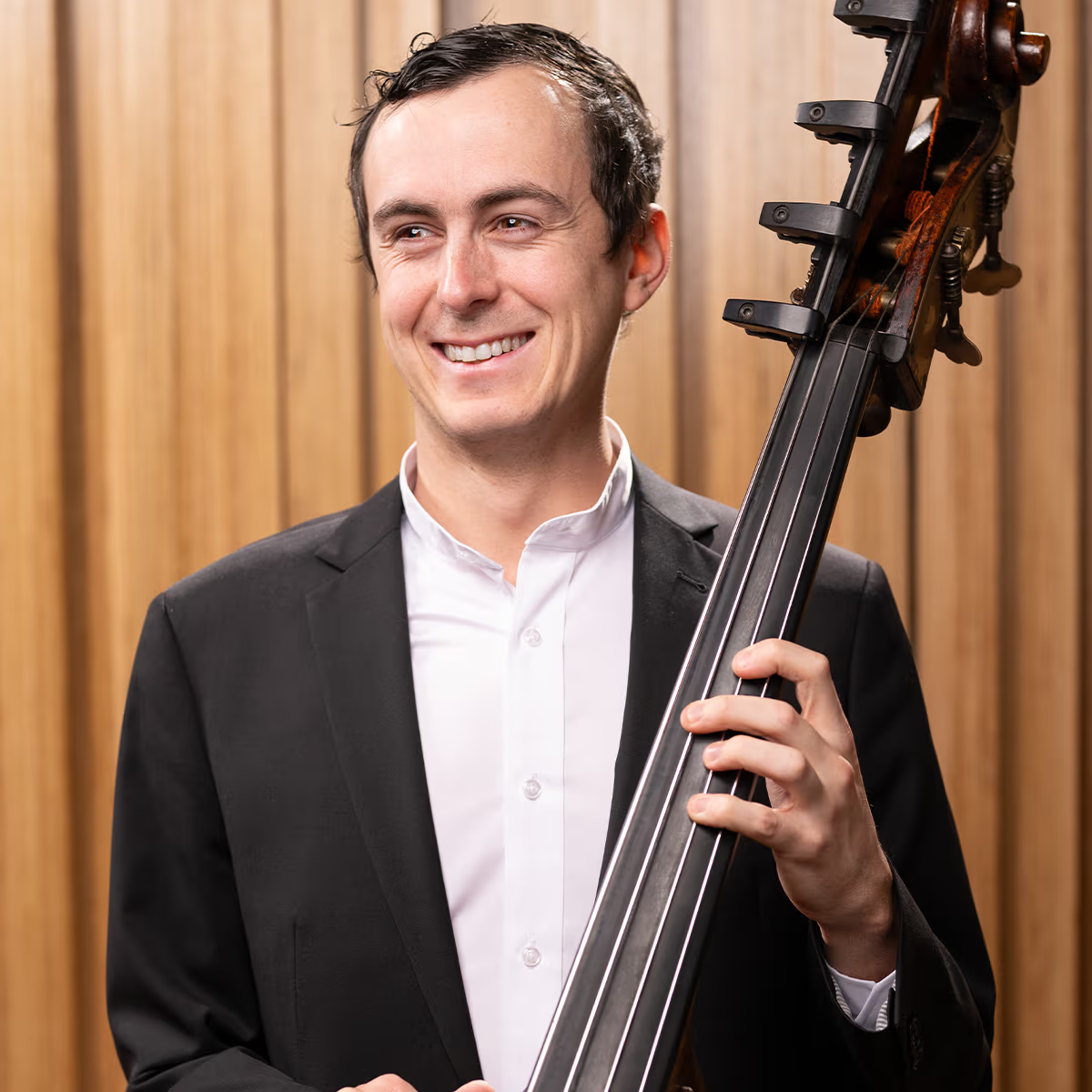
Tutti Double Bass
Supported by Lynette Hayward
Matthew McGrath
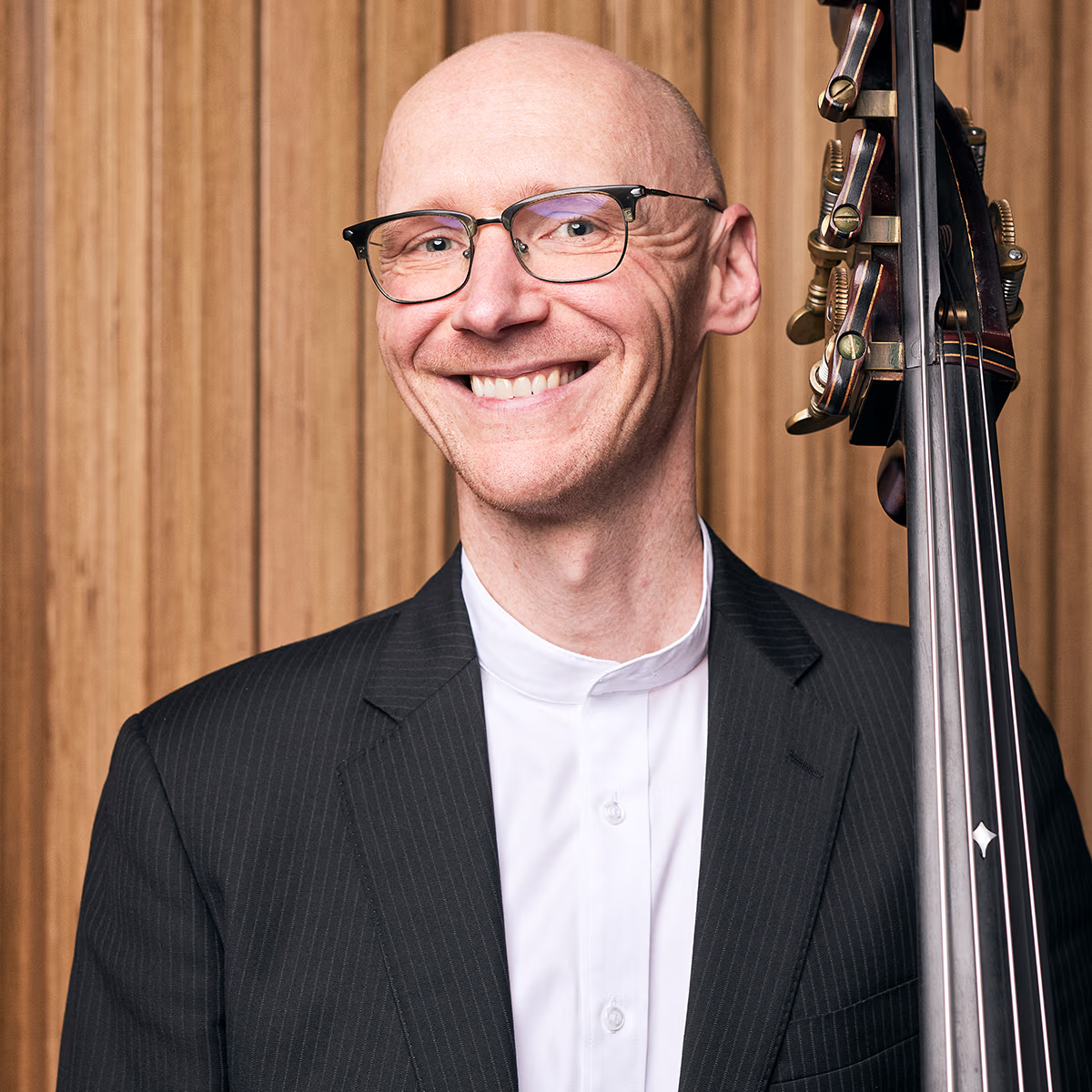
Tutti Double Bass
Supported by Catherine & David Hamilton
Consisting of flutes, oboes, clarinets and bassoons, our woodwinds act as the colour palette of the orchestra. They span the full pitch range, from contrabassoon-low to piccolo-high.
Each member of the woodwind family is unique and these musicians often feature in characteristic solos.
As a section they add sparkle, energy and clarity to the overall orchestral texture, while also functioning as harmonious blocks of sound.
Our woodwind musicians are sometimes thought of as athletes of the orchestra, perhaps due to how strong their lungs need to be.
This fact – of musicians needing to breathe in and out to play the instruments – gives woodwinds a distinct vocal quality.
Once you recognise their signature sounds, these instruments are impossible to miss.
Vacancy
Principal Flute
Lloyd Hudson
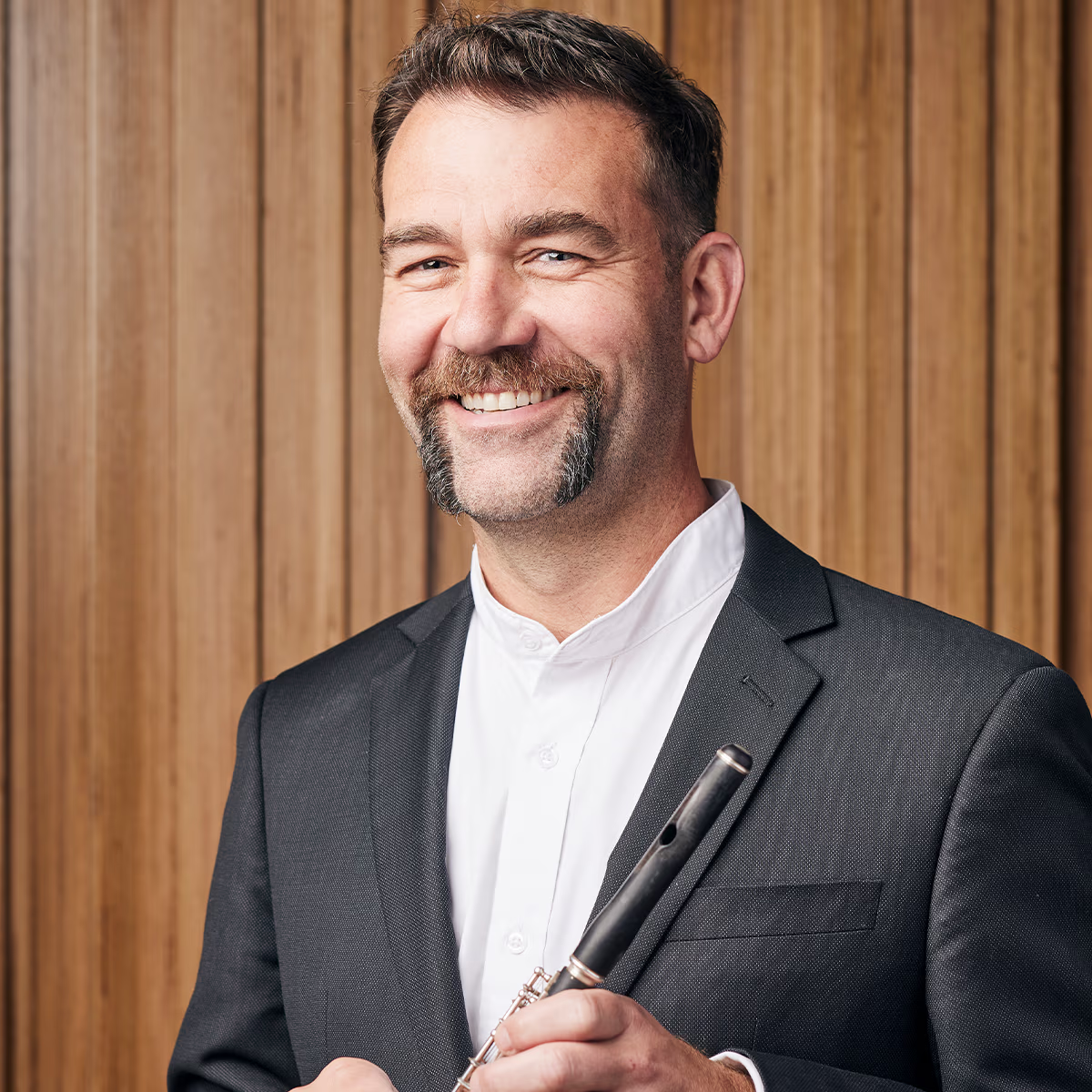
Principal Piccolo / Tutti Flute
Vacancy

Principal Oboe
Dinah Woods

Principal Cor Anglais / Tutti Oboe
Supported by John Cauchi AM & Catherine Walker
Andrew Seymour

Principal Clarinet
Supported by Dr Peter Stanton
Eloise Fisher
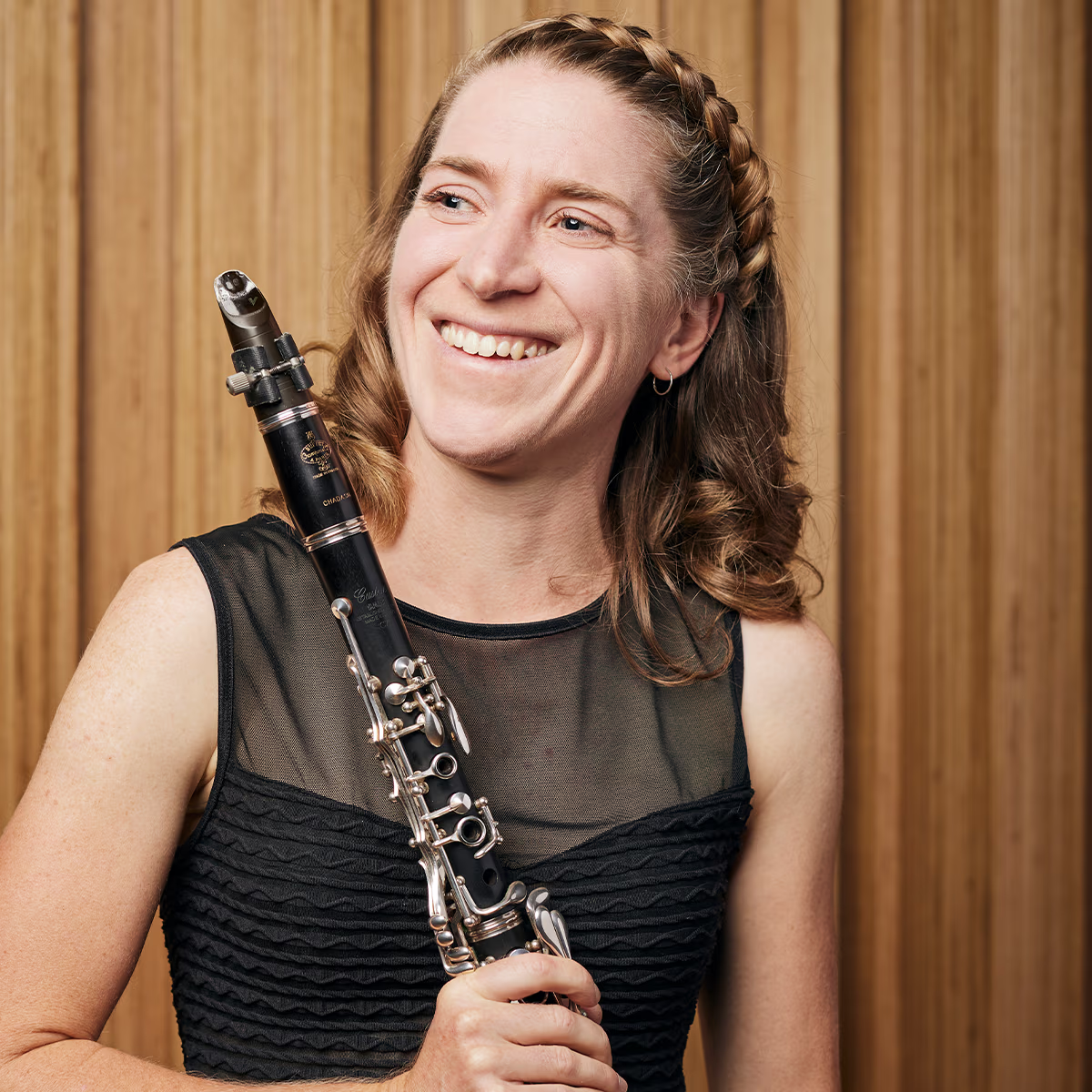
Principal Bass Clarinet / Tutti Clarinet
Supported by Louise & Tim Mooney AM
Tahnee Van Herk

Principal Bassoon
Supported by Dr Hilary Wallace
Melissa Woodroffe
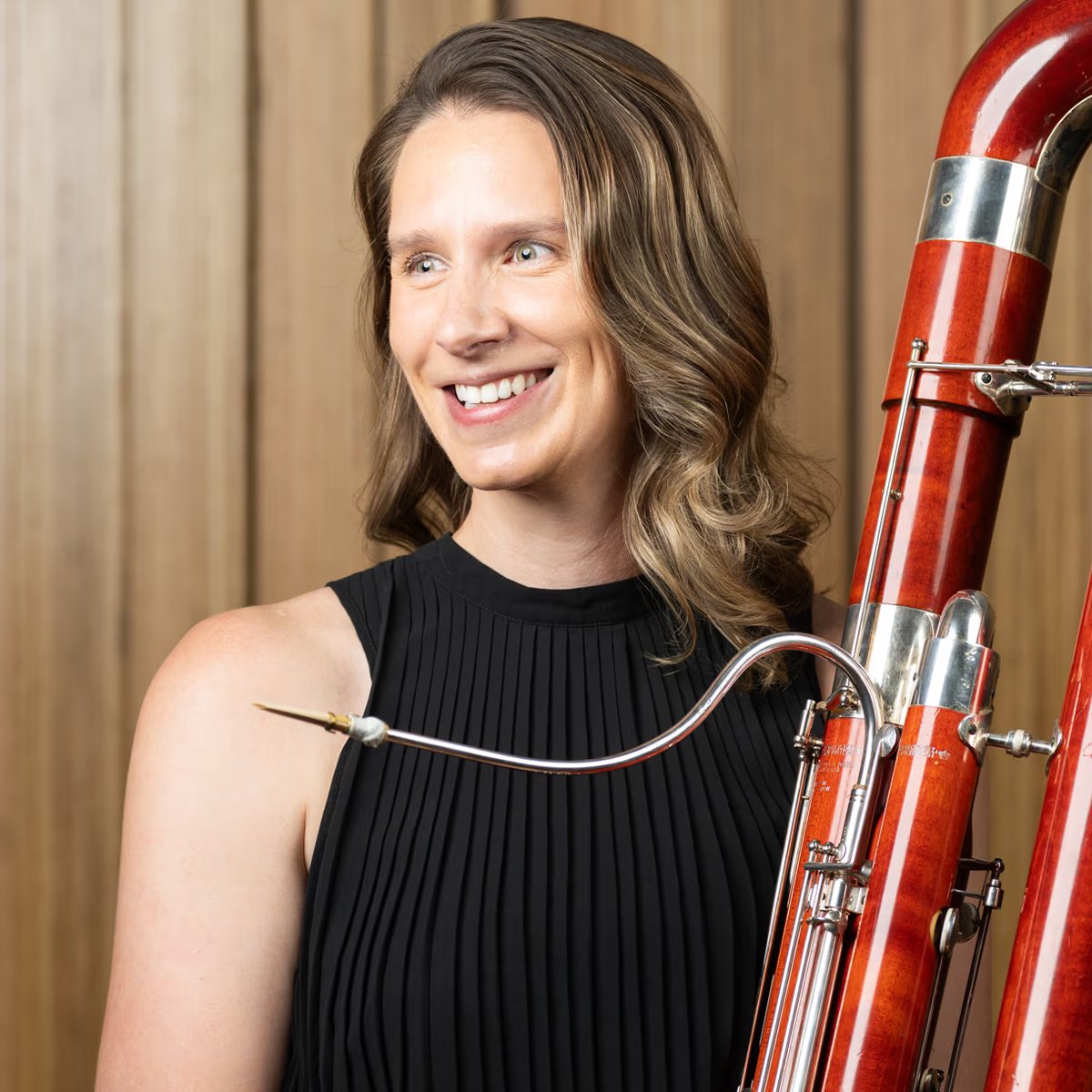
Principal Contrabassoon / Tutti Bassoon
Our brass section includes horns, trumpets, trombones and a tuba. Although they’re part of the same instrument family, our horns usually sit to the left when looking at the stage, while our trumpets, trombone and tuba are to the right.
Trumpets, trombones and tuba play distinct roles such as soaring solos and triumphant fanfares. Together they provide brilliance, majesty and lyricism. This section has the largest dynamic range of the orchestra, from an airy pianissimo (a very softly played section of music) to a spine-tingling fortissimo (very loud).
The horns function as the ‘glue’ between the winds, brass and string sections. There is no limit to their expressive and harmonic capabilities – heroic and moving solos, quirky interjections, harmonic blending and long, held notes.
If you look closely you'll see the bells of the horns face the back of the stage and you may notice their sound seems to be almost reflected, as if heard from a distance.
Greg Stephens
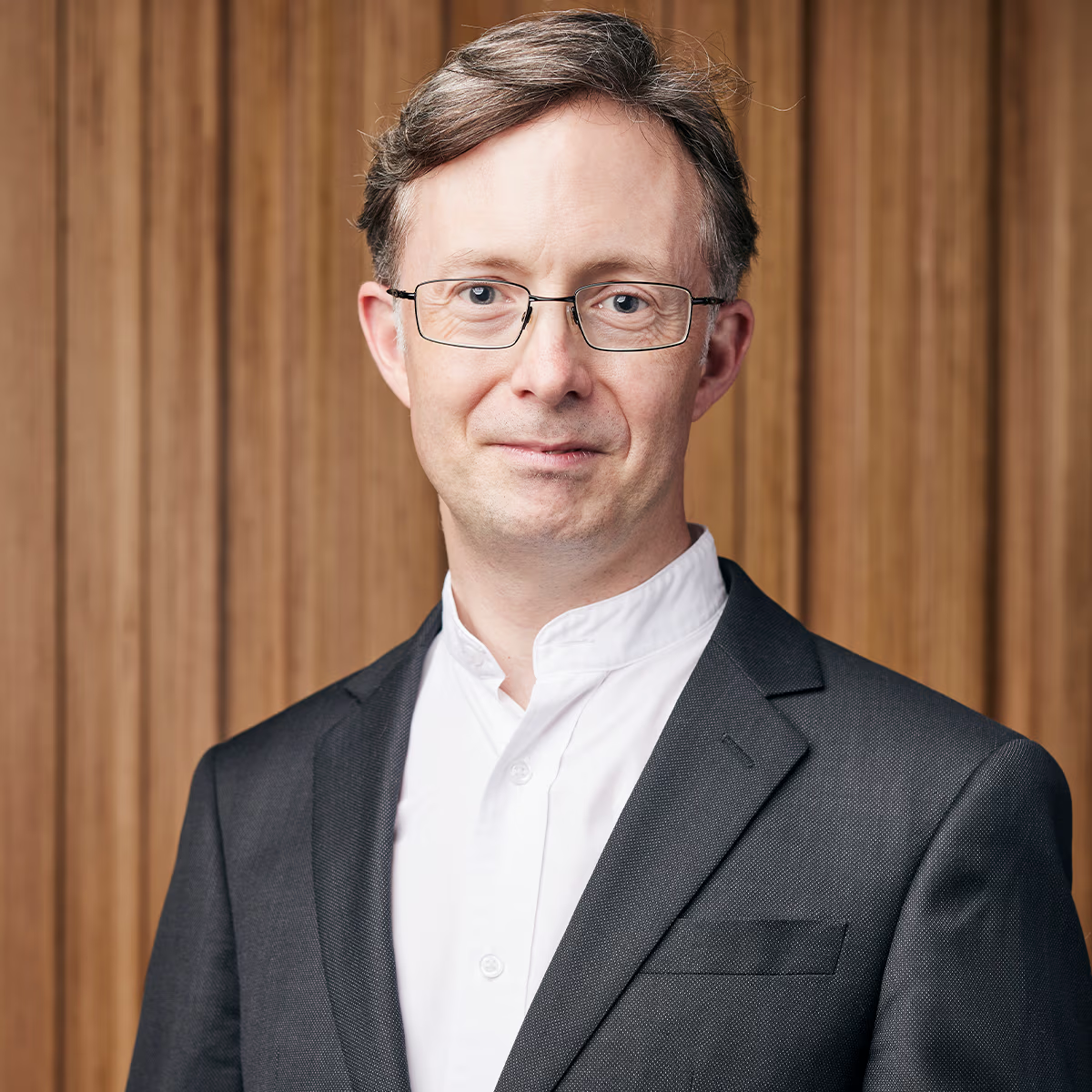
Principal First Horn
Claudia Leggett

Principal Third Horn
Supported by Anonymous
Roger Jackson
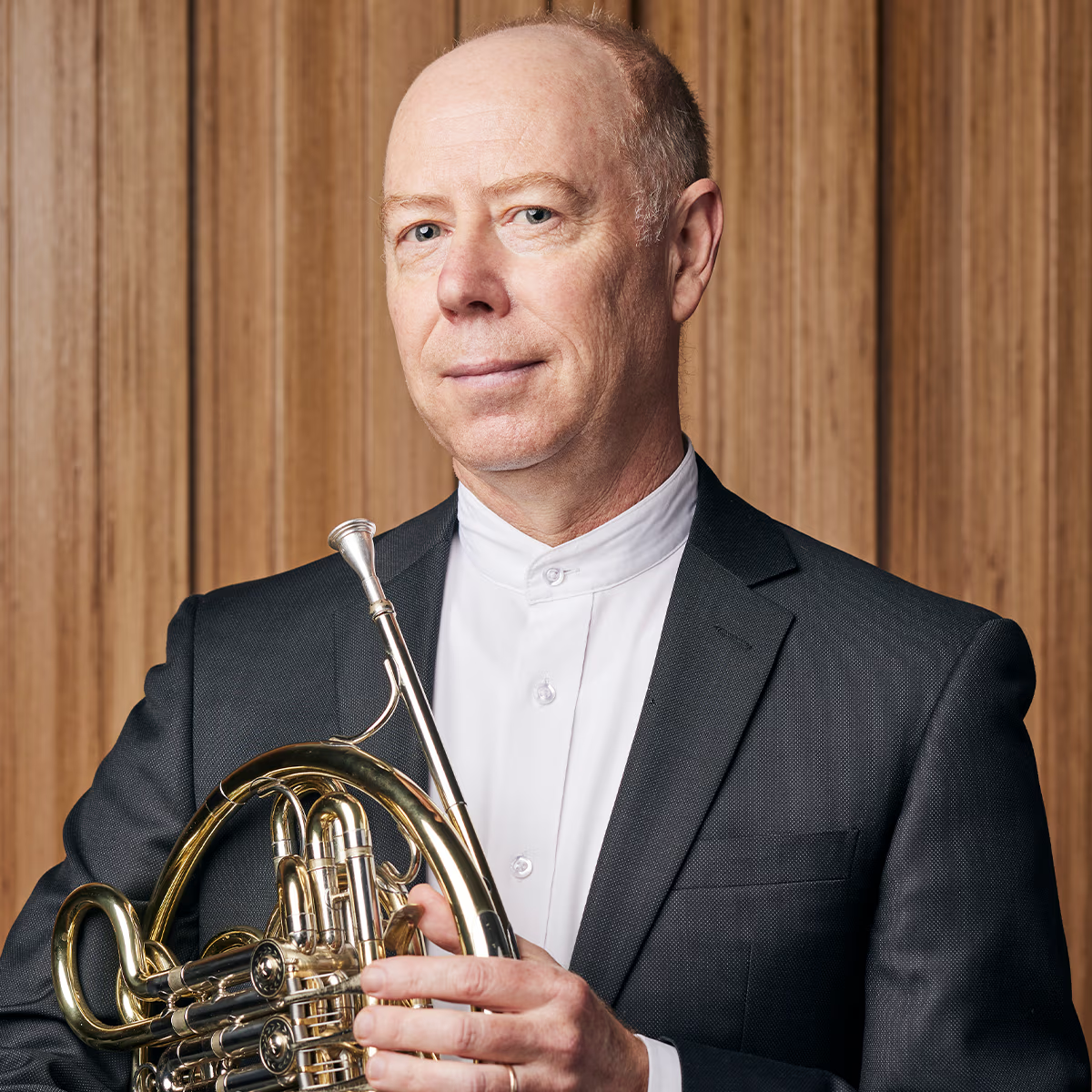
Tutti Horn
Julian Leslie
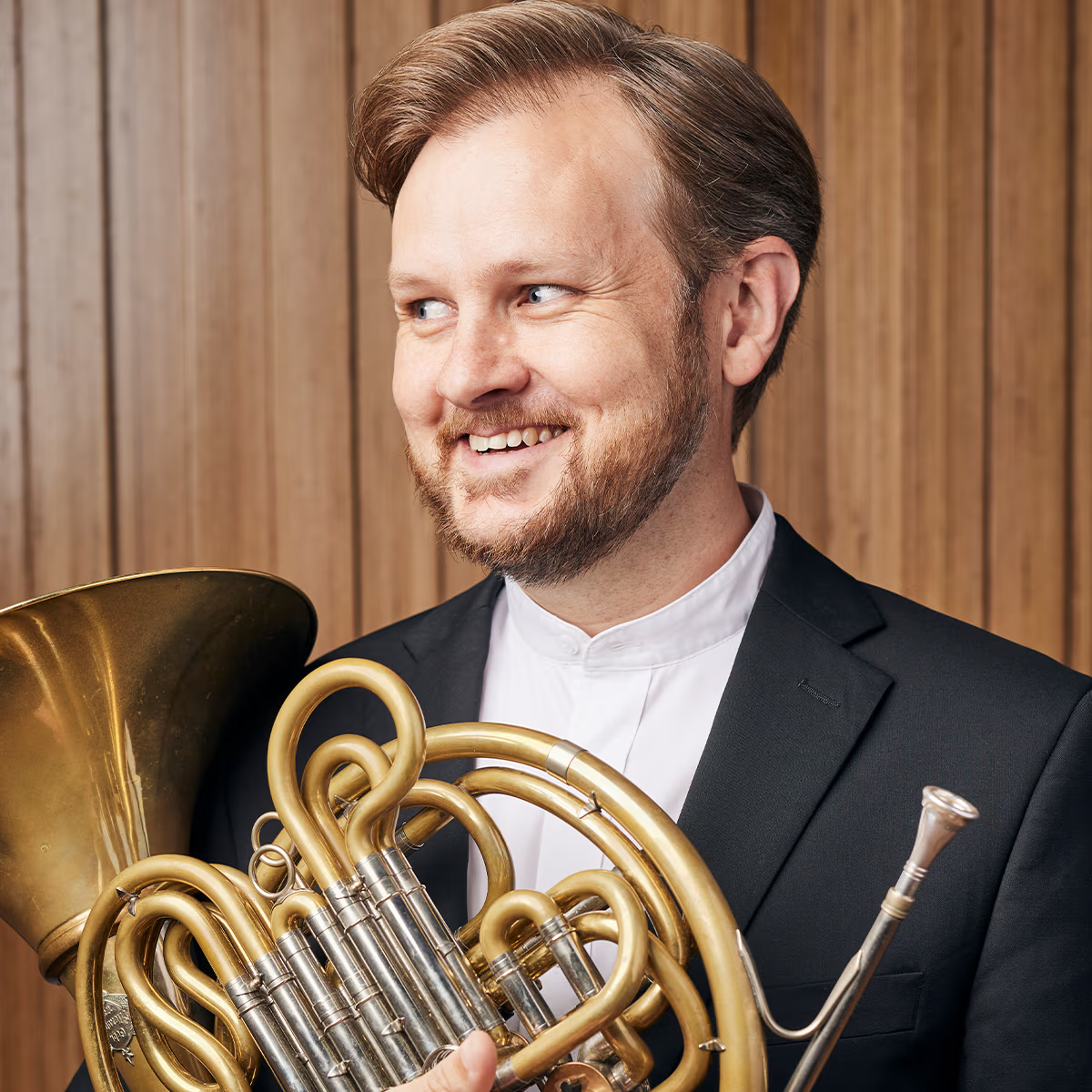
Tutti Horn
Fletcher Cox
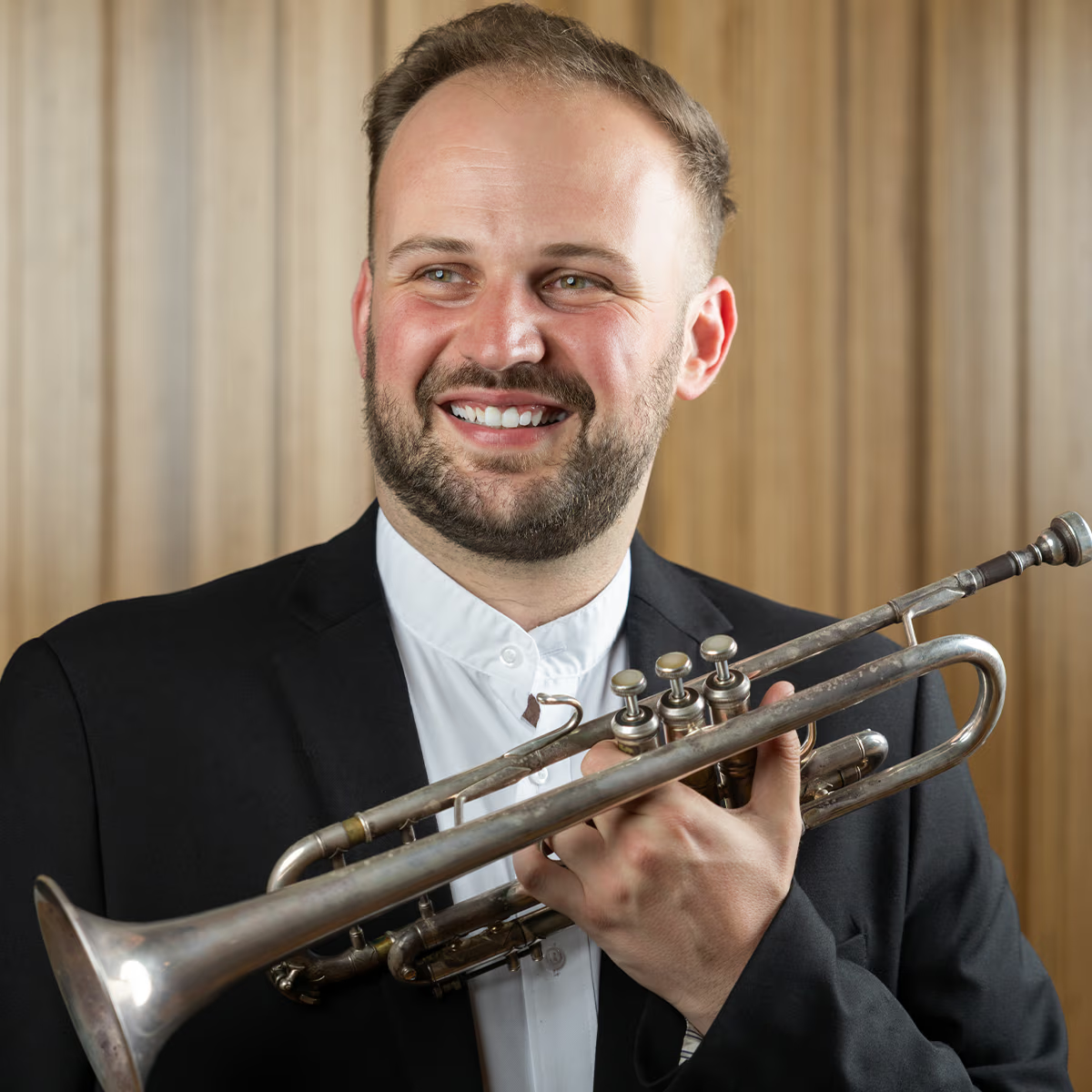
Principal Trumpet
Supported by Chris & John Sandow
Mark Bain
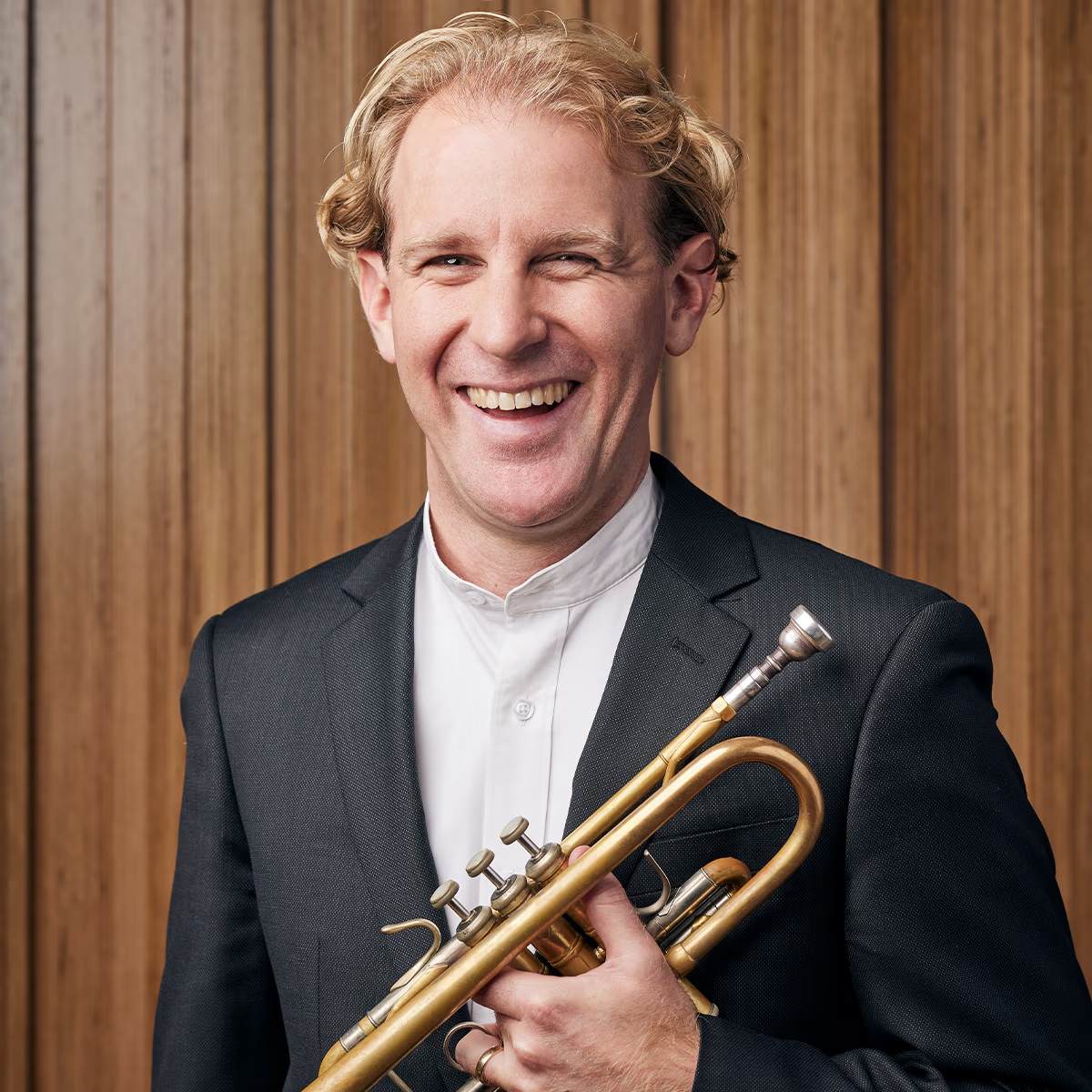
Tutti Trumpet
David Robins
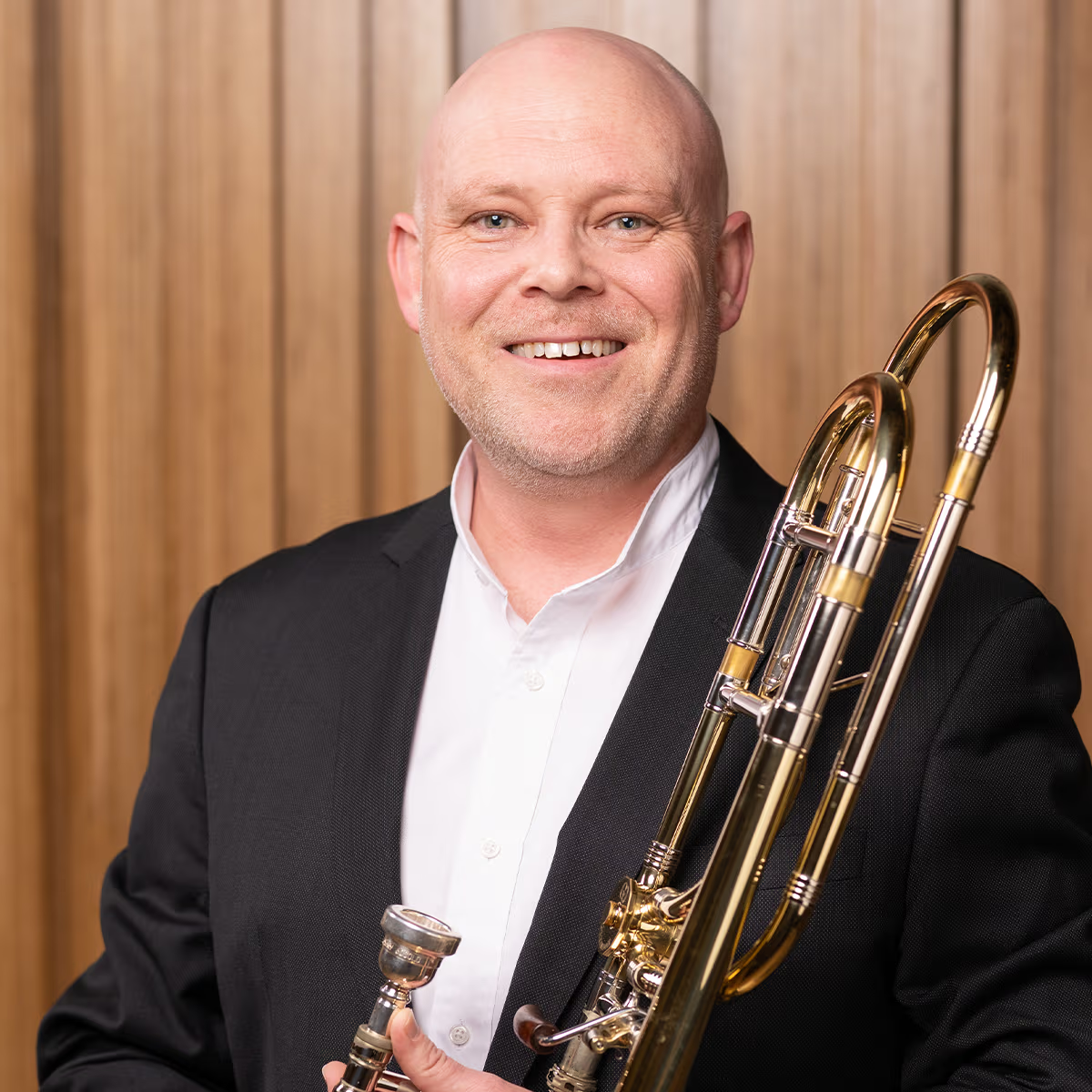
Principal Trombone
Supported by Ang Madden
Jackson Bankovic
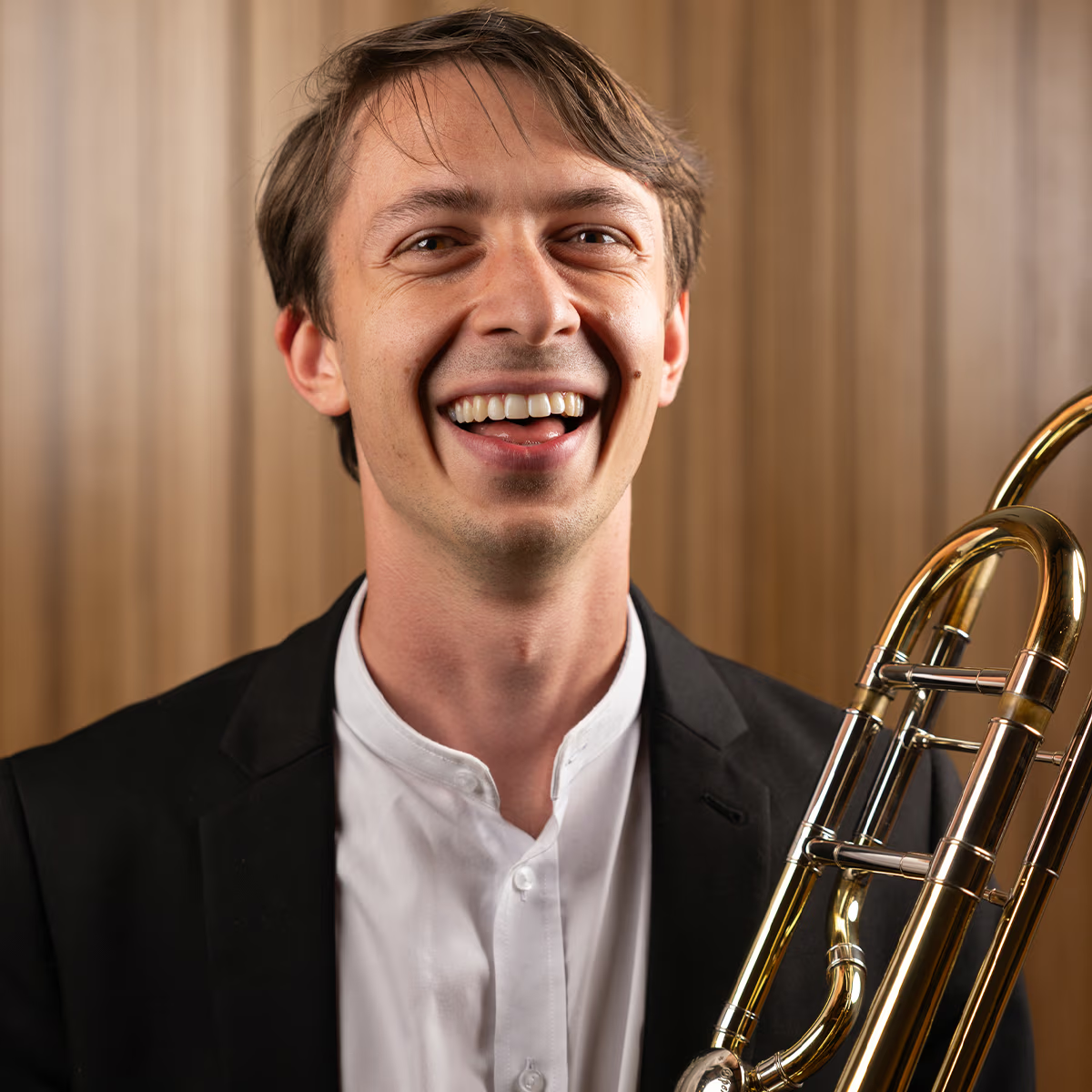
Tutti Trombone
Supported by Rae & Lindsay Young
James Littlewood
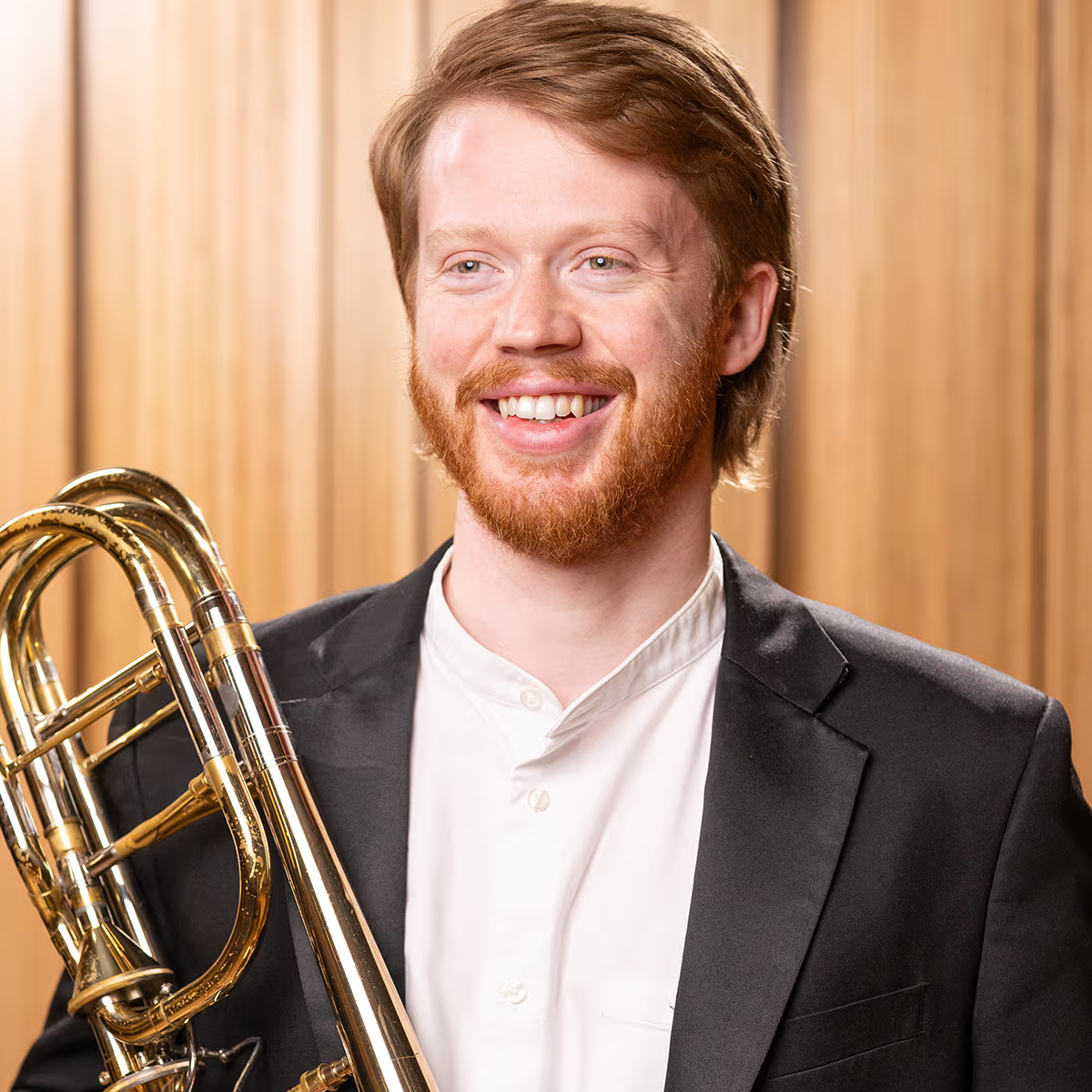
Principal Bass Trombone
Rachel Kelly

Principal Tuba
Supported by Marie Heitz
The timpanist’s role is separate to percussion and forms the rhythmic and harmonic heart of the orchestra.
Timpani are a type of kettle drum with adjustable pitch. These instruments colour the music in important ways, adding resonance and power to a performance.
Percussion covers the whole gamut of instruments that can be hit or shaken including drums, cymbals, xylophones, gongs and bells – even the slide whistle and typewriter.
Percussionists provide rhythmic drive as well as moments of sparkle, such as the triangle at the top of a lyrical phrase.
Watch carefully as the energy of the orchestra builds towards a thunderous finale and you might spot our percussionist preparing for a perfectly timed cymbal crash.
Matthew Goddard
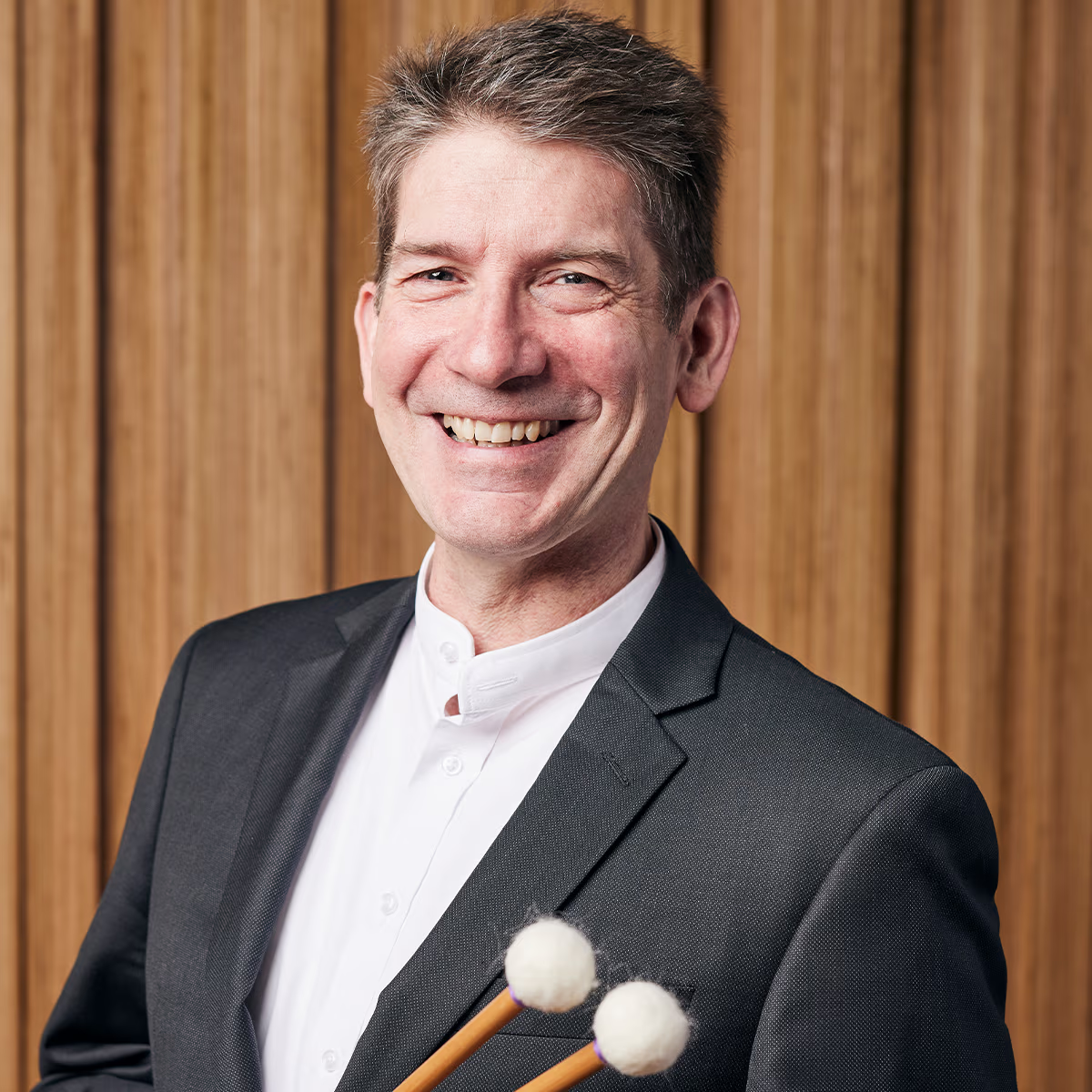
Principal Timpani
Supported by David & Glenys Rich
Gary Wain
Principal Percussion
Supported by Caroline Sharpen
Did you know?
We’re proud to be one of Australia’s leading performing arts companies and part of the DNA of Tasmanian cultural life – we have been inspiring, invigorating, and delighting audiences through music since 1948.
Jean-Baptiste Vuillaume (1798–1875) crafted 3000+ instruments in his time and we’re very proud to have a violin made in 1845 on loan from two of our generous Tasmanian patrons.
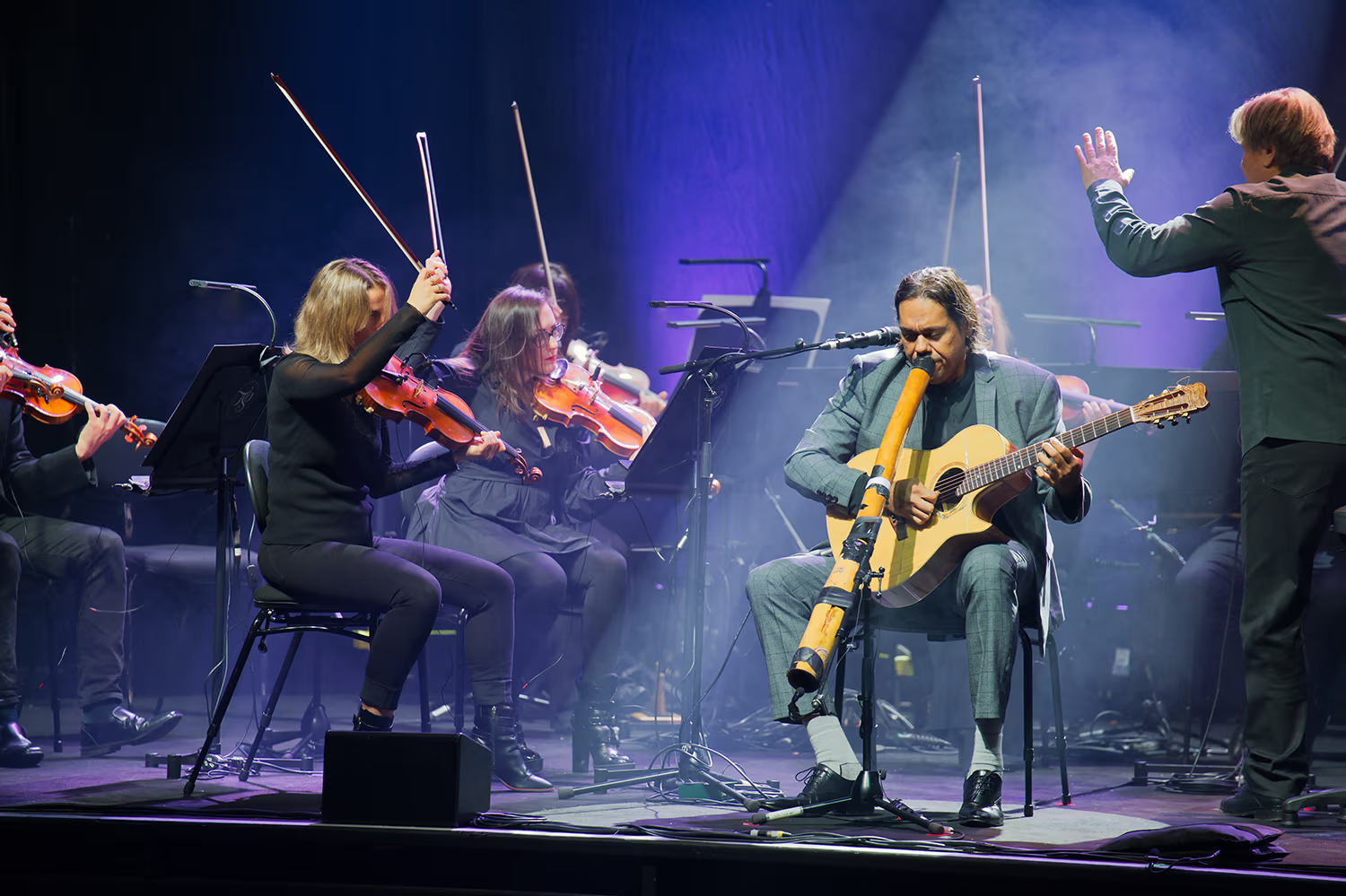
Our artistic collaborators include Violent Femmes, James Ehnes, The Cat Empire, Birds of Tokyo, The Whitlams, William Barton, Missy Higgins, Ben Folds, Meg Washington, Nina Stemme, The Wolfe Brothers, Joyce DiDonato, Camilla Tilling, Kate Miller-Heidke, Katie Noonan, Eskimo Joe and Yeol Eum Son.
Our orchestra has played across Australia and overseas, including tours of China, South America, Canada and Japan.
More of our Musicians
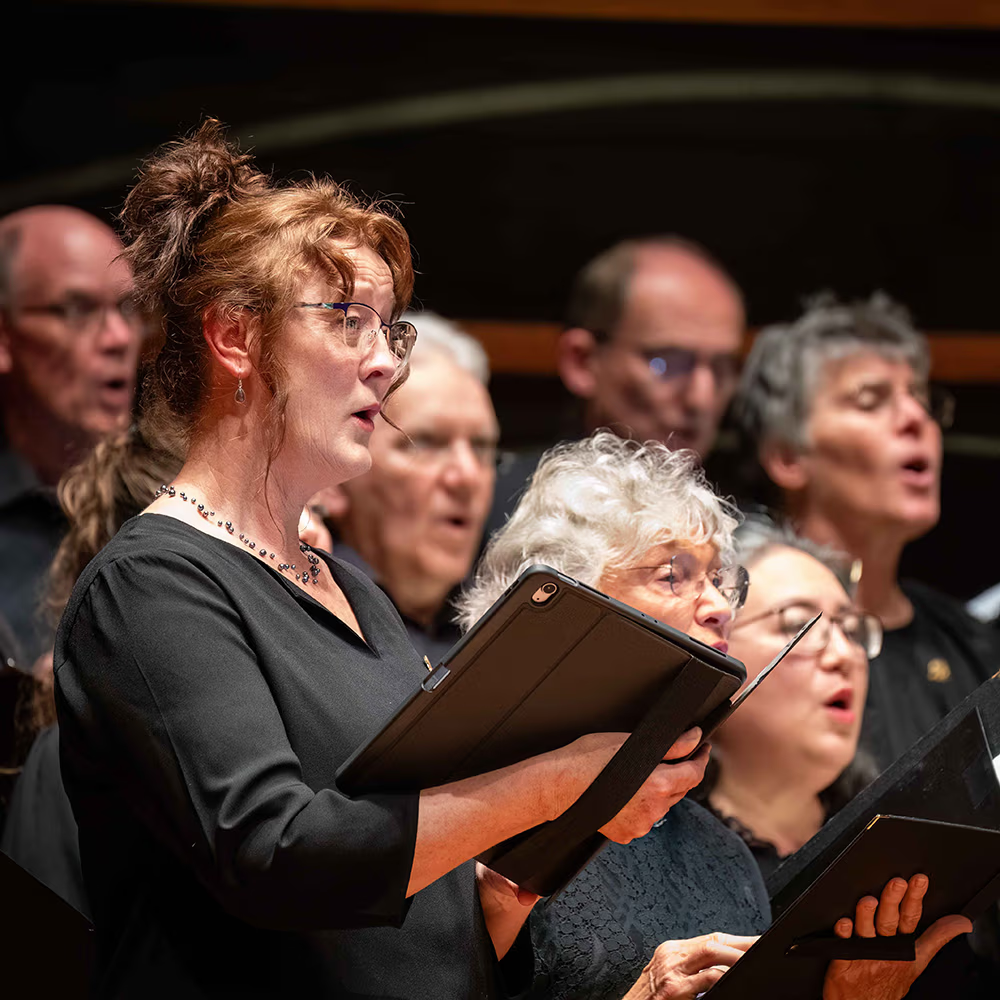
TSO Chorus
Learn more about the internationally acclaimed TSO Chorus and find out how to audition.
Represented Composers
Go to the TSO Publishing website and meet the composers represented by our publishing house.
Vacant Positions
If you’re interested in joining the orchestra you can see vacant positions on our careers platform.