News

Mid-year catch up with Caroline Sharpen

7 August 2025.
As we head into the second half of 2025, TSO CEO Caroline Sharpen shares what she’s most looking forward to in the months ahead. Caroline also reflects on the challenges confronting the arts – and why live music matters, now more than ever.
Image

Hi Caroline, what do you think audiences are craving in 2025?

Audiences come to concerts for all sorts of reasons.

A special date, an escape, spine tingles with great friends, the excitement of hearing your favourite piece live.

I’m not sure if audiences crave it – but music written by people, for people to play, for people to enjoy, is so essentially human.

And the experience of being in the room is incomparable.

You don’t just see and hear an orchestra, you feel it – through the soles of your feet, your sternum, your eyelids.

Most importantly you feel it in your heart.

Tasmanians have told us how much these sorts of experiences matter, now more than ever.

What are you most looking forward to in the second half of 2025?

My favourite moments are when TSO musicians step forward as soloists and demonstrate their cellular-level artistry.

Next month Stuart Thomson (Principal Double Bass) will take centre stage in a concert program titled Fairy Tales. This musical canvas is perfect for sprinklings of magic, fantastical creatures and feats of heroism.

I can’t wait for Obscura 3|Sequenza – an unmissable collaboration between beloved choreographers Graeme Murphy AO and Janet Vernon AM, solo musicians of the TSO and dancers from the Queensland College of Dance.

And you might have seen that 140,000 Australians voted Beethoven's Fifth Piano Concerto, the Emperor, the #1 piece for piano.

So please don’t miss soloist Javier Perianes, Eivind Aadland and your TSO performing Beethoven's Emperor this Friday!

Image

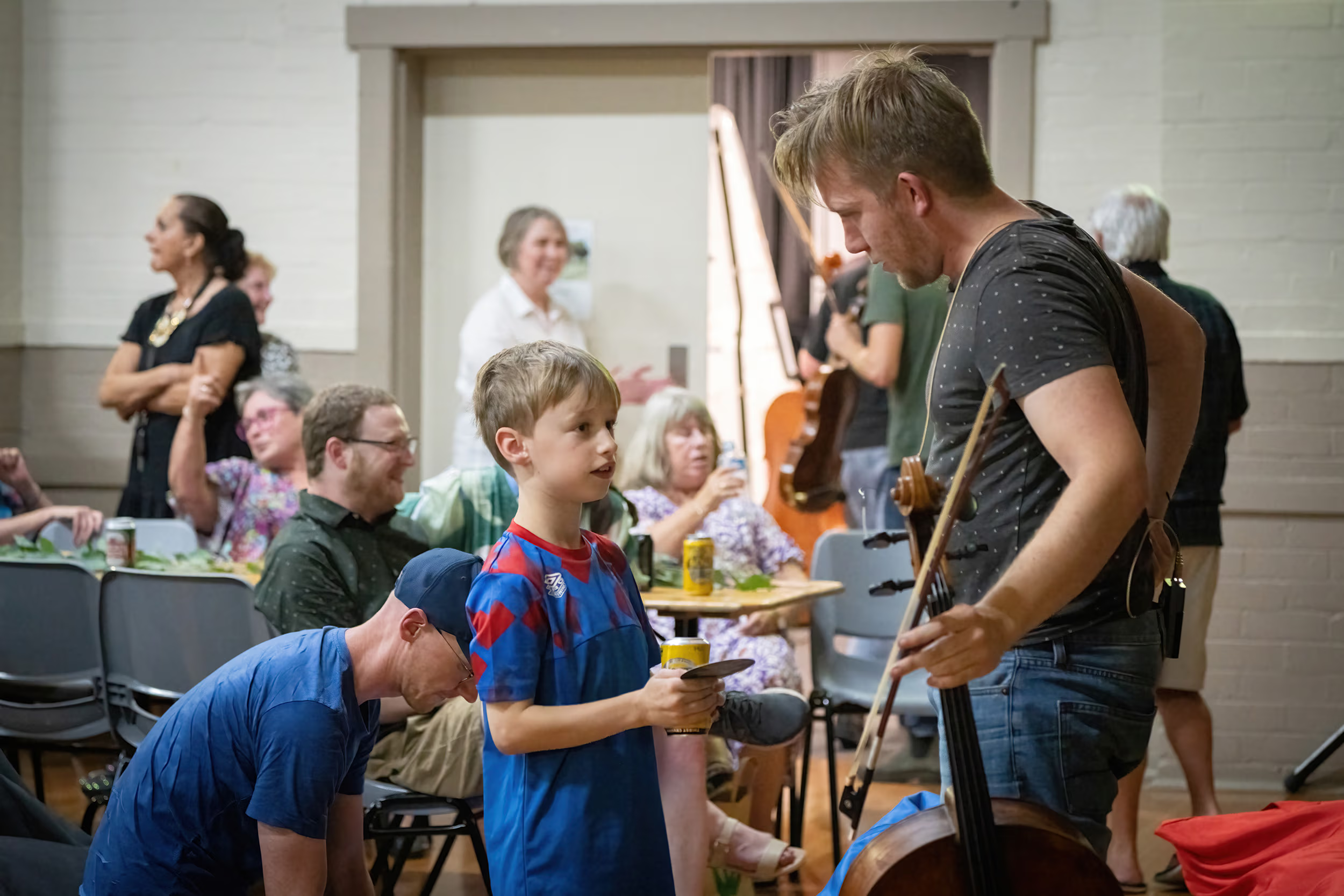
Principal Double Bass, Stuart Thomson (second from left) will star in Fairy Tales on 11 September. Pictured here with fellow TSO musicians Douglas Coghill, Lucy Carrig-Jones and Jonathan Békés.

Two contemporary dancers rehearse in a bright studio, with one dancer lifting the other mid-air in a graceful pose. Both wear casual dance attire and socks, capturing the raw, athletic artistry of the movement.

Dancers from the Queensland College of Dance preparing for Obscura: Sequenza under the tutelage of Graeme Murphy and Janet Vernon.

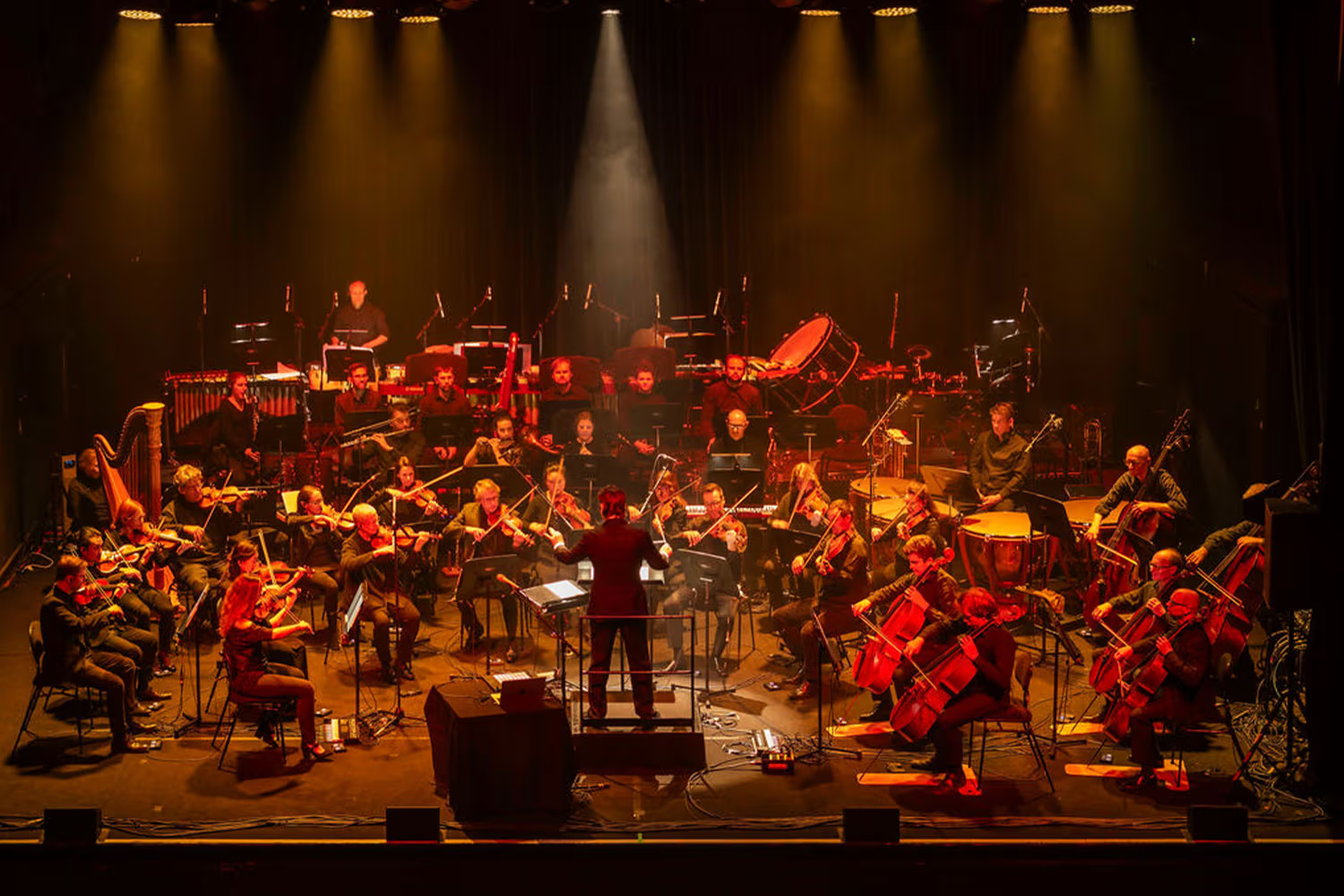
A full orchestra performs on stage in a modern concert hall with wooden acoustic paneling, while a pianist plays a grand piano at center stage. The audience watches attentively in the dimly lit foreground.

Spanish pianist Javier Perianes will perform as soloist in Beethoven’s incomparable ‘Emperor’ with the TSO on 15 August.

Last week the TSO hosted the latest round of participants in the Australian Conducting Academy. Please tell us more about this initiative.

One of the silver linings of the pandemic was that it shone a light on how heavily Australia has relied on international conductors for our professional ensembles.

When borders closed, we all realised the need to invest more deeply in developing our own.

At the TSO we evolved the Australian Conducting Academy in partnership with the State Orchestras of Australia, Orchestra Victoria and Auckland Philharmonia.

It is now one of the major conductor training programs in the world.

Last week we were so pleased to welcome the cohort of six participants in the 2025-26 ACA program to Tasmania for a two-day workshop with our Chief Conductor and Artistic Director Eivind Aadland and the TSO.

The task: to conduct the orchestra in excerpts from Schumann’s Symphony No. 2 and the eternal family favourite Peter and the Wolf by Benjamin Britten.

It was another exceptional learning experience – tapping into the hundreds of years of collective wisdom and experience of TSO musicians, and of course Eivind’s interpretative, technical and practical advice.

He is a superb teacher and mentor.

A young conductor receiving instruction from an experienced conductor.

Chief Conductor Eivind Aadland instructs Australian Conducting Academy participant Sam Weller as part of last year's ACA module.

What are some of the biggest challenges for orchestras today?

I probably don’t need to say too much about rising costs, cost of living, balancing ambition with affordability.

This is a theme for individual, households and businesses nationwide. Societal polarisation is a more covert challenge.

I worry for the erosion of nuance, the ability and willingness to grapple with complexity, allowing two things to be true at once, being comfortable with and being able to hold multiple truths – and be a welcoming, inclusive place for all.

There are case studies from around the world demonstrating the damage to some of the most important organisations to have existed – for various reasons on this theme.

This is an enormous challenge for all of us.

Thank you Caroline!

Sign up for TSO news

Be the first to hear about TSO concerts, programs and news! Join our mailing list today.

Sign Up