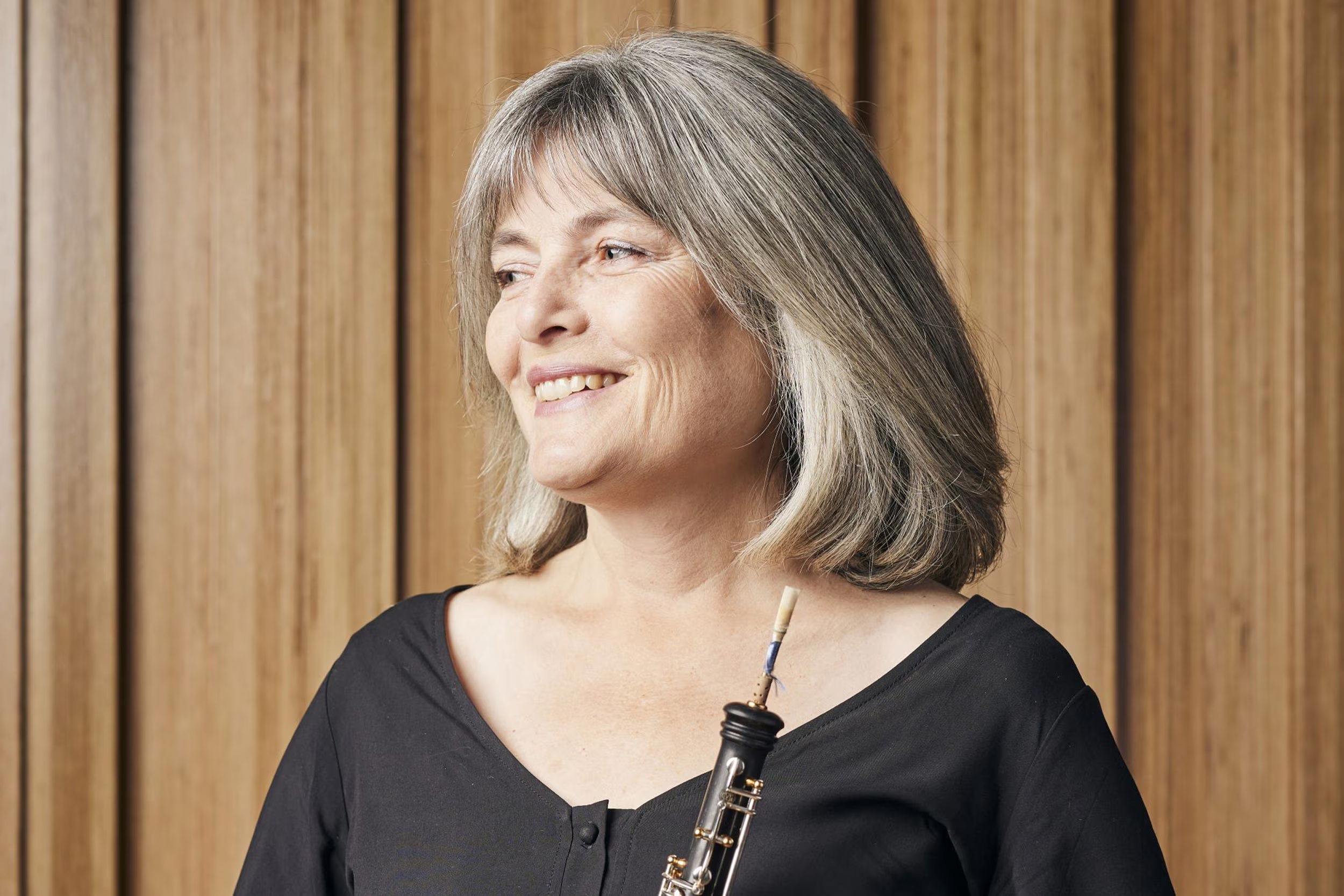
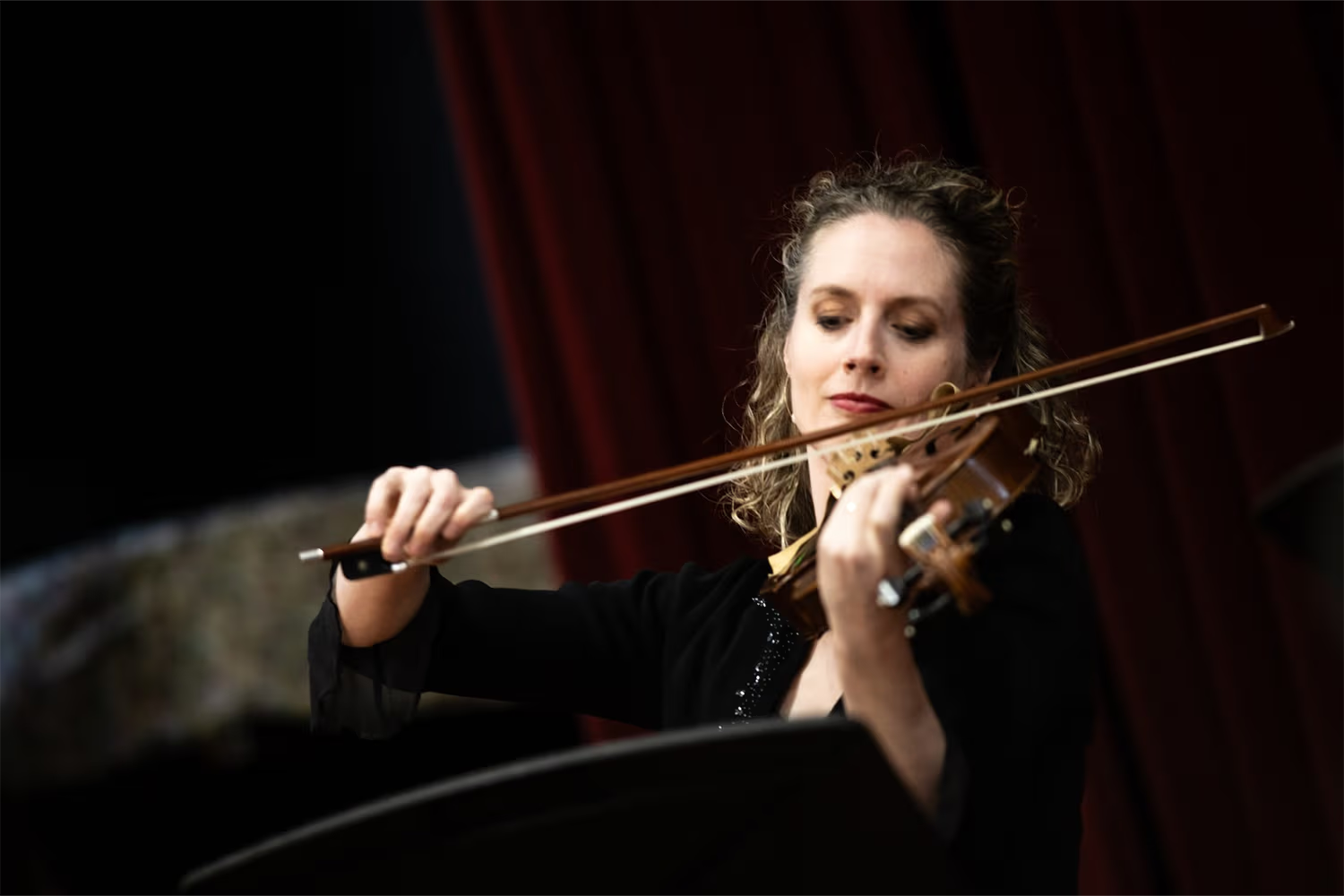
TSO musician Dinah Woods considers herself ‘miraculously lucky’ to have become a professional orchestral player – especially given her school had no music program.
‘I grew up in Castlemaine in Victoria and had no music at my school at all. It was a music-free zone and I had to do everything outside of school,’ she says.
‘Miraculously, a musician teacher pilot program started up in Bendigo, so I was able to travel for lessons every week. The pilot program didn’t last – it ended soon after I finished year 12. So I was very, very lucky.’
Dinah has two roles with the TSO – Principal Cor Anglais and Tutti Oboe.
‘The thing I like the most about my job is that I get to do a bit of both. I don't have to always be a soloist, and I'm not always anonymous, so it's a really good balance for me,’ she says.
We caught up with Dinah to hear about her favourite pieces to play and her ever-growing collection of reed making machines.
Hi Dinah, please tell us about your incredible reed-making setup.
When I said to my mum I want to learn the oboe, she said, ‘Oh yes, that's a lovely sounding instrument, but you're going to spend the rest of your life worrying about reeds’. And she's absolutely right.
I make my own reeds for both instruments and for the oboe reeds, I start from scratch – with tubes of cane that I split and gouge using a machine.
I have another machine to shape the cane, and then I have to bind the cane onto the reed staple by hand, using a very strong thread.
The final stage of it is scraping the reed so that it will buzz and vibrate.
I hear you have a machine that takes out some of the grunt work?
When I was last in Europe I brought back what’s called a reed profiler, and it's got a blade that scrapes the reed to exactly the same dimensions every time.
I used to do that by hand, which can take an hour or more, and this just takes out that element of guesswork and error.
Then you can fiddle with a knife and tweak it.
Reeds are foremost in your mind. For example, this morning, I need half an hour to warm up before rehearsal, because I want to see how my reeds are going to work today when it's raining outside.
When you talk about finding the perfect cane for making reeds, you sound a bit like a wine aficionado!
It is a lot like wine! I've got some really old cane at the moment and, just like with wine, I’m wondering ‘Have I left it too long?’, or ‘Will it give that amazing, special sound?’.
When I was straight out of college I went to France to the place where the cane was grown.
Just being on the Mediterranean and seeing the cane in bundles standing in the sun and learning about how it’s grown was pretty amazing.
Your recent solo in Sibelius’ The Swan of Tuonela was described as ‘suberb’ and ‘outstanding’ by Limelight magazine. What are some of your favourite pieces to play?
I enjoy playing Ravel a lot. Mother Goose Suite, which is coming up later in the year is one of my favourite pieces of all time.
Ravel really knows how to make each instrument king.
I also enjoy playing Dvořák, although he wrote notoriously difficult parts for oboe.
You can either look forward to those pieces with dread. Or, as I have learnt to do, you can really enjoy that challenge.
You moved to Hobart in 2001 after a busy freelance career interstate. What are you enjoying most about life in Tasmania at the moment?
I used to cycle, but now – much to my surprise – I’ve taken up running.
It used to be just me going out for a run, but thanks to Eloise (fellow TSO musician Eloise Fisher), I've ended up joining a training group.
I've never competed in my life before in a team, so this is quite a hilarious new thing for me.
Every Saturday there's a run somewhere and we're all getting a bit obsessed with how many points we're earning for the team and that sort of thing.
It's just a nice way to make an otherwise solitary activity into a communal thing.
And of course it’s great for fitness.
Playing a musical instrument is quite a physical thing and it’s nice to have that feeling of stamina and that mindset of, ‘I can run up that hill’ or in a musical sense, ‘I can get through this epic piece’.
Read more behind-the-scenes stories on our News page.
.jpg)