To address the urgent lack of piano tuners in Tasmania, the TSO developed the Professional Piano Tuning and Technician Services Scholarship.
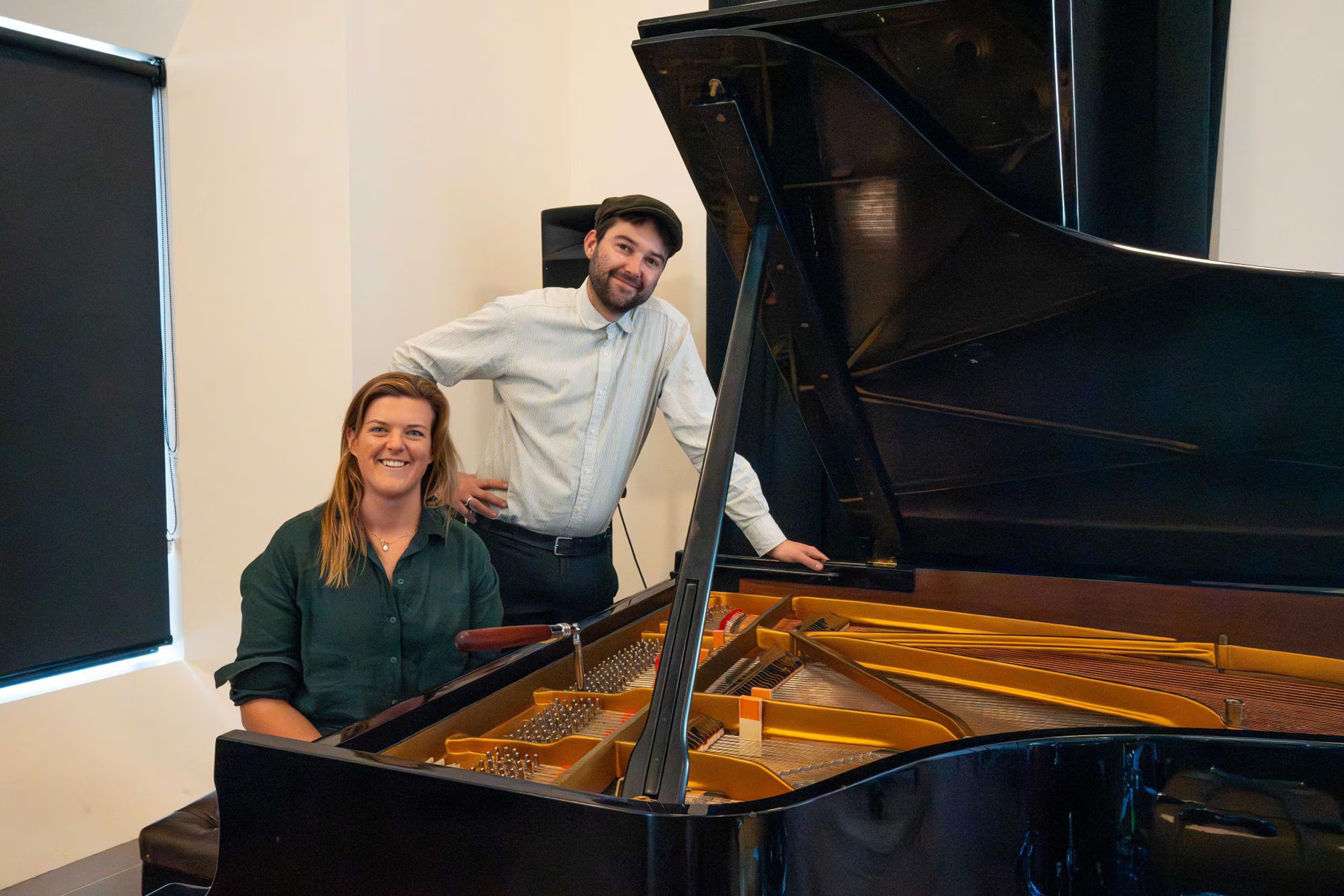
Launceston-based May Thomas and Hobart's Sam Lilburn were selected from a large field of applicants and undertook a 12 month course at the KJPIANOS Academy of Piano Technology in Sydney.
Both completed the highly demanding course with distinction and are now back on home soil, working across Tasmania while receiving ongoing mentorship from veteran piano tuner Rod Collins.
Stephanie Eslake tells the story.
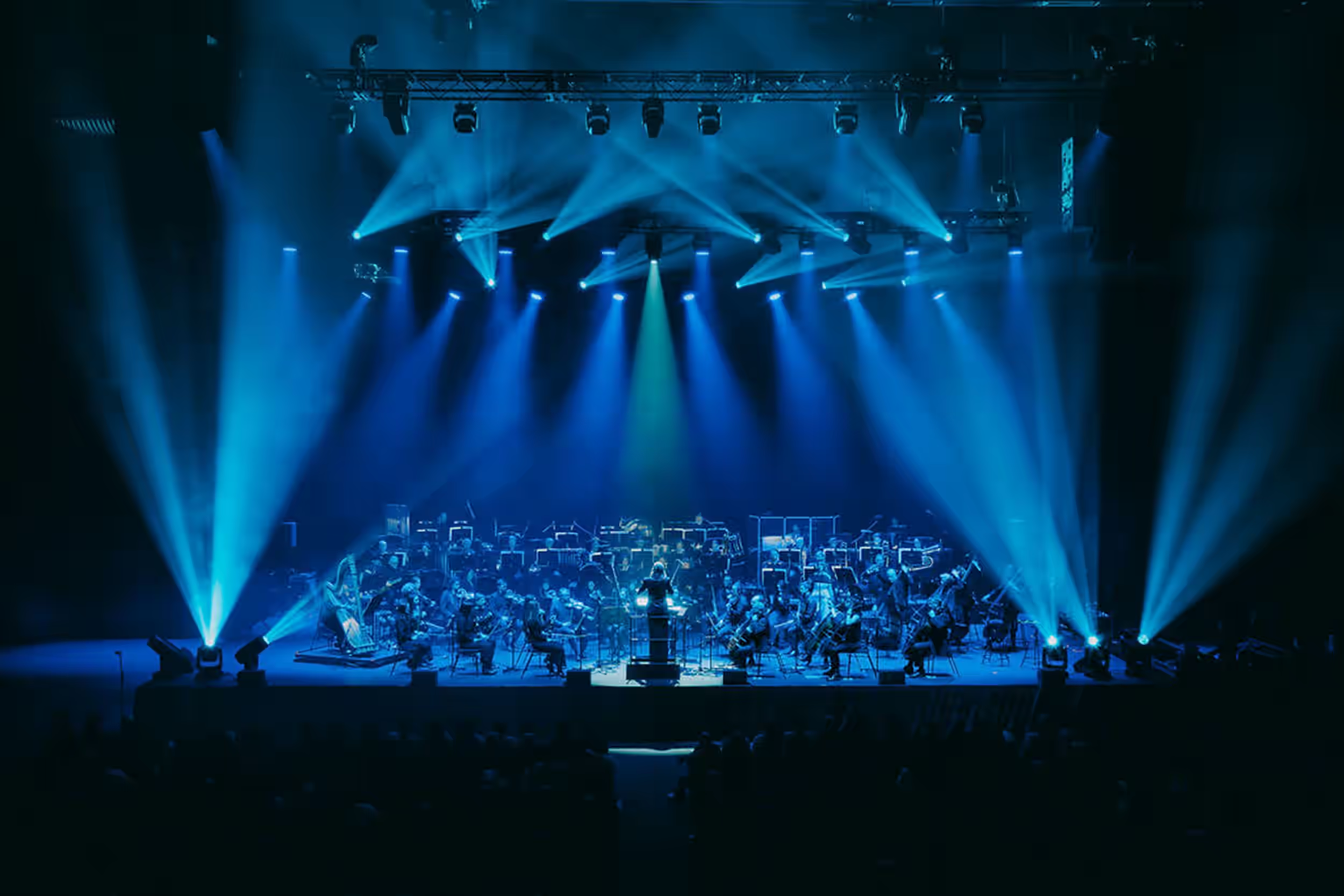
You’ve settled into your seat for a piano performance with the Tasmanian Symphony Orchestra, and the house lights start to dim. Silence falls on the concert hall, and from it emerges a round of applause as a world-class pianist enters the stage. They might adjust their seating position in front of their instrument, but aside from that, their hands are raised and ready to play without hesitation.
The reason they can approach their instrument with confidence is because they know it will sound beautifully in tune. And that’s because somebody woke up in the early hours of the morning to adjust the piano in ways that seem incomprehensibly small, but elevate an average performance to a brilliant one.
The TSO regularly collaborates with renowned pianists including Tamara-Anna Cislowska, Alexander Gavrylyuk, Nobuyuki Tsujii and Javier Perianes.
Without a skilled piano tuner, these concerts could not happen.
Veteran technician Rod Collins in Hobart comes from a family of piano tuners, and his own career spans five decades.
He and Launceston-based Alistair Strating, a second generation piano tuner, are among the few technicians in Australia with the skills and experience to work with the calibre of piano soloists who perform with our symphony orchestras.
Rod occasionally starts as early as 4.30am to prepare for a TSO concert.
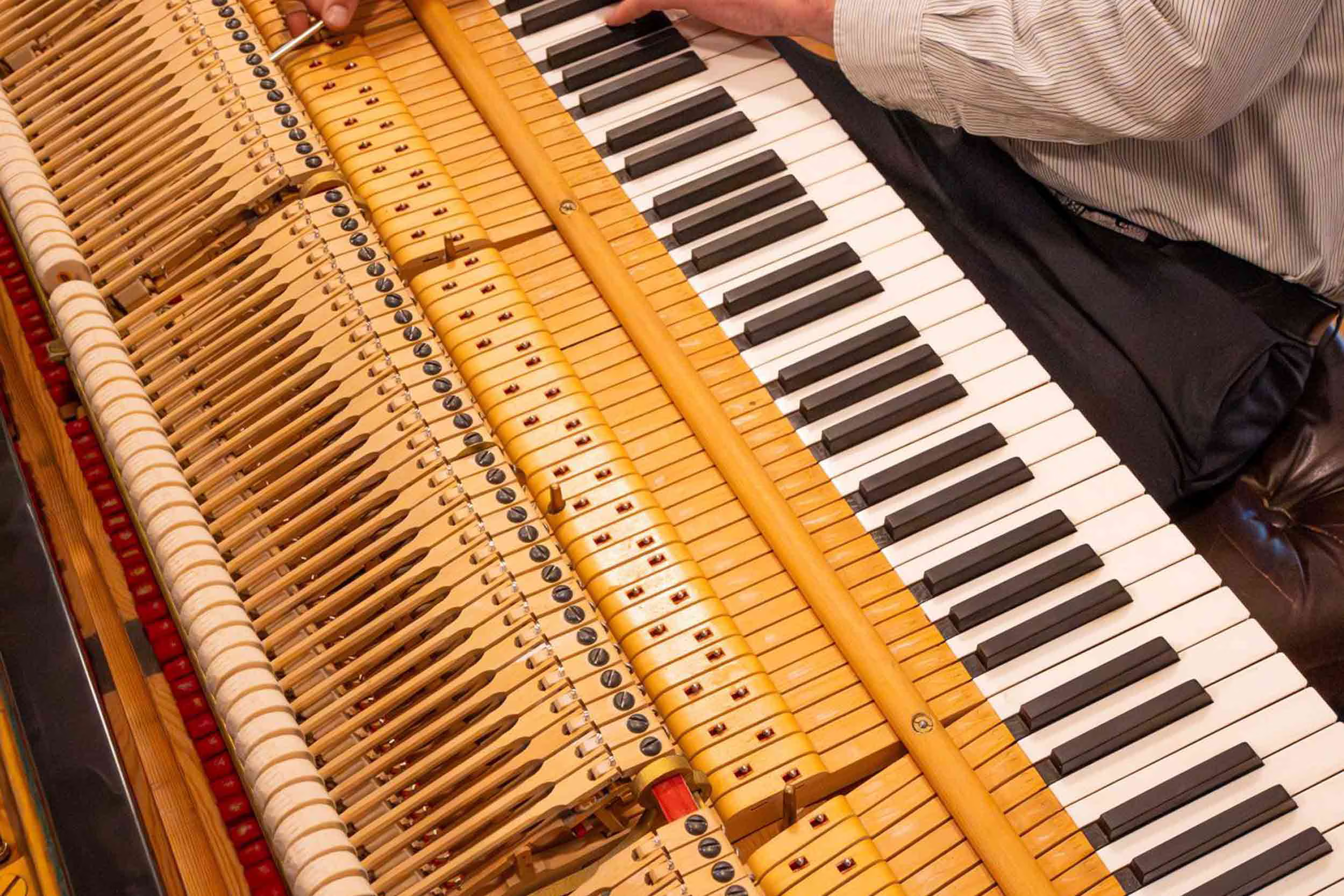
He ensures each piano is in tune and 'mechanically perfectly, or as near as is possible'.
This can depend on factors ranging from the construction to the ambient temperature of the room.
He also adjusts the 'voice' of the instrument, sometimes preparing two or three pianos so the musician can take their pick.
“One of those pianos will be slightly sweeter … the other one might be a little bit more bity in its tonal quality,” Rod says.
To address the urgent lack of piano tuners, the TSO developed the Professional Piano Tuning and Technician Services Scholarship, in partnership with the Tasmanian Music Teachers’ Association and local music institutions, with funding from the Allport Bequest.
Dr Jody Heald AM – a piano pedagogue, adjudicator, and professional accompanist – helped to initiate the scholarship.
Concerned about the increasing need for piano tuners, Jody approached TSO CEO Caroline Sharpen who took action to facilitate the new program.
As Caroline says, everyone involved 'knew what was at stake if this vital artisan profession wasn't replenished'.
'Jody and I pulled together a working group of people who are knowledgeable about Tasmania’s large and priceless "piano fleet". Together we conceived the scholarships and post-program mentoring to build the capacity of ambitious Tasmanians keen to pursue this career,' Caroline says.
'The vision was shared by The Allport Bequest who generously supported both scholarships. We were genuinely blown away by the number and quality of applicants.'
For Jody, a driving force is the importance of fostering the next generation of musicians and technicians.
'Over a number of years, I could see a gradual decline in the piano tuning profession as the apprentice system of training disappeared,' she says.
The two scholarship participants, May Thomas and Sam Lilburn, received support to train with Keven Jenkinson at the KJPIANOS Academy of Piano Technology in Western Sydney – both completing the 12 month course with distinction.
'Being part of the whole process, including the selection committee, has been a significant chapter in my own career, and I am happy that the effort has proved to be so worthwhile,' Jody says.
Meet our scholarship graduates
Sam Lilburn has a background in audio engineering, and found his detail-oriented approach to sound served him well during the scholarship, and into his new career.
'It’s using all the skills I’ve developed over the years, but pushing it into a different channel,' Sam says.
'In future, the "pie in the sky" for me is working on some of the beautiful instruments with the TSO.'
Since the scholarship, he has been 'travelling around Tasmania, and meeting musicians and getting to know their instruments'.
He’s worked for piano teachers, local concerts, University of Tasmania musicians at The Hedberg, and in domestic settings.
'Once that first booking came through, it has just kind of gone crazy since then. Each month has been busier than the last, which has just been awesome,' Sam says.
May Thomas has also used the scholarship to develop her career, while simultaneously working part time as a paramedic.
Piano tuning and paramedicine may sound like very different paths, but May sees 'many similarities'.
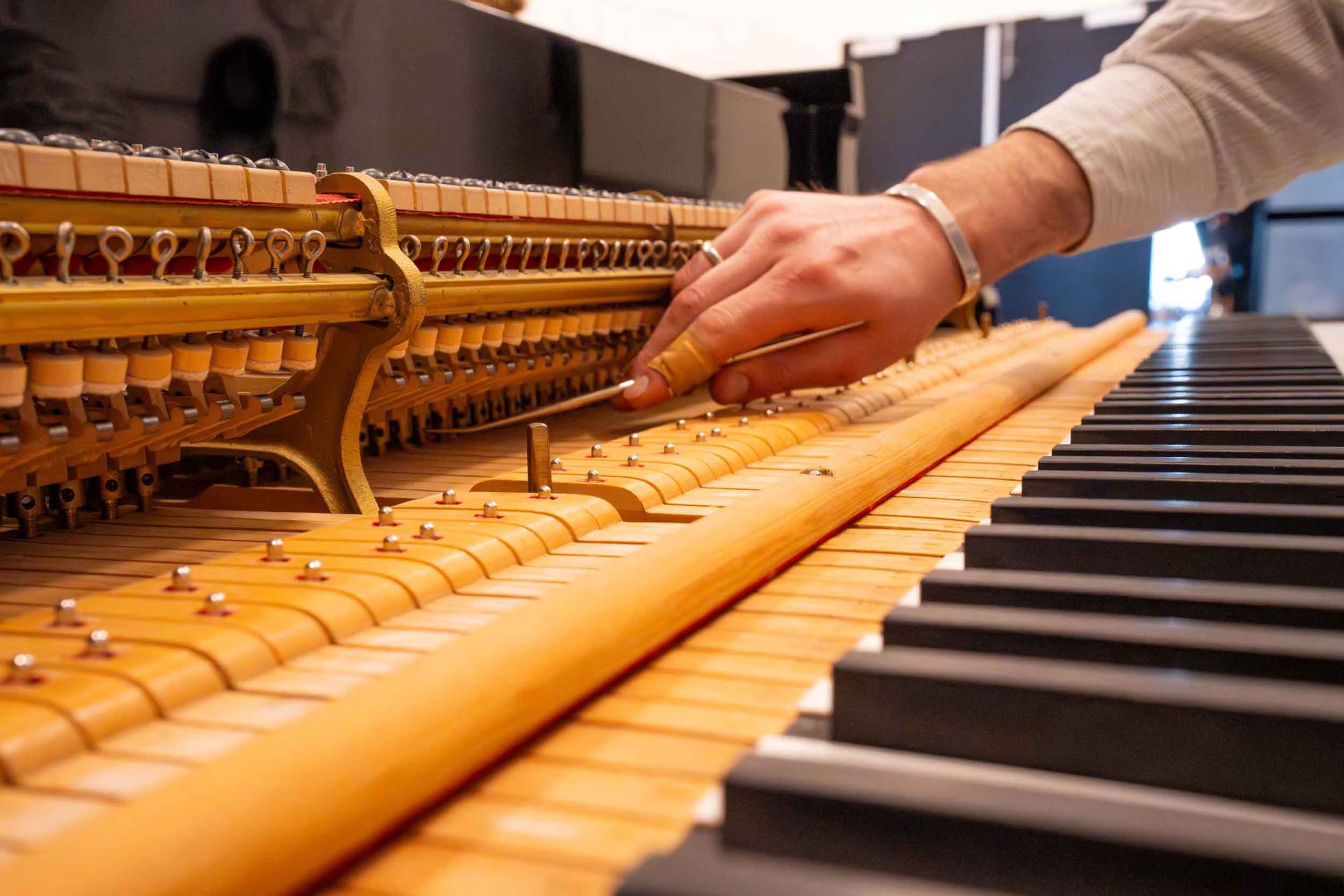
'Just like people, pianos are intricate, individual and complex beings. Each instrument has its own personality and more than 10,000 individual parts,' May says.
'No two pianos are the same, just as no two people are the same.'
'The combination of science and art involved in the tuning and maintenance of a piano never ceases to amaze me. The two mediums are the ultimate combination of human knowledge and human expression and emotion,' she says.
As a musician herself (piano and French horn), May was drawn to the scholarship because, she says, 'it would be devastating to see an aspiring and potentially brilliant Tasmanian musician quit because of being discouraged when met with a suboptimal instrument'.
'A well-regulated and tuned piano is pivotal to each musician being able to progress with their musical journey and enjoy playing without distraction.'
May has loved networking with experienced piano tuners, visiting workshops, and observing different approaches to the craft.
As she says, it has allowed her to 'draw some nuggets from an absolute gold mine of experience that has been acquired by others over many decades'.
'From antique bird-cage pianos passed through the family generations to shiny concert grand in performance venues, there is never a day one doesn’t learn something new,' May says.
During the scholarship year, a favourite learning experience was touring a workshop that made copper-wound bass strings, giving May and Sam an elevated appreciation of the intricacies of the piano.
They now bring that appreciation to their work in Tasmania.
.avif)
%20A7_0380%20DX.avif)