An ancient mystery and a long-lost masterpiece are at the centre of next Friday’s concert.
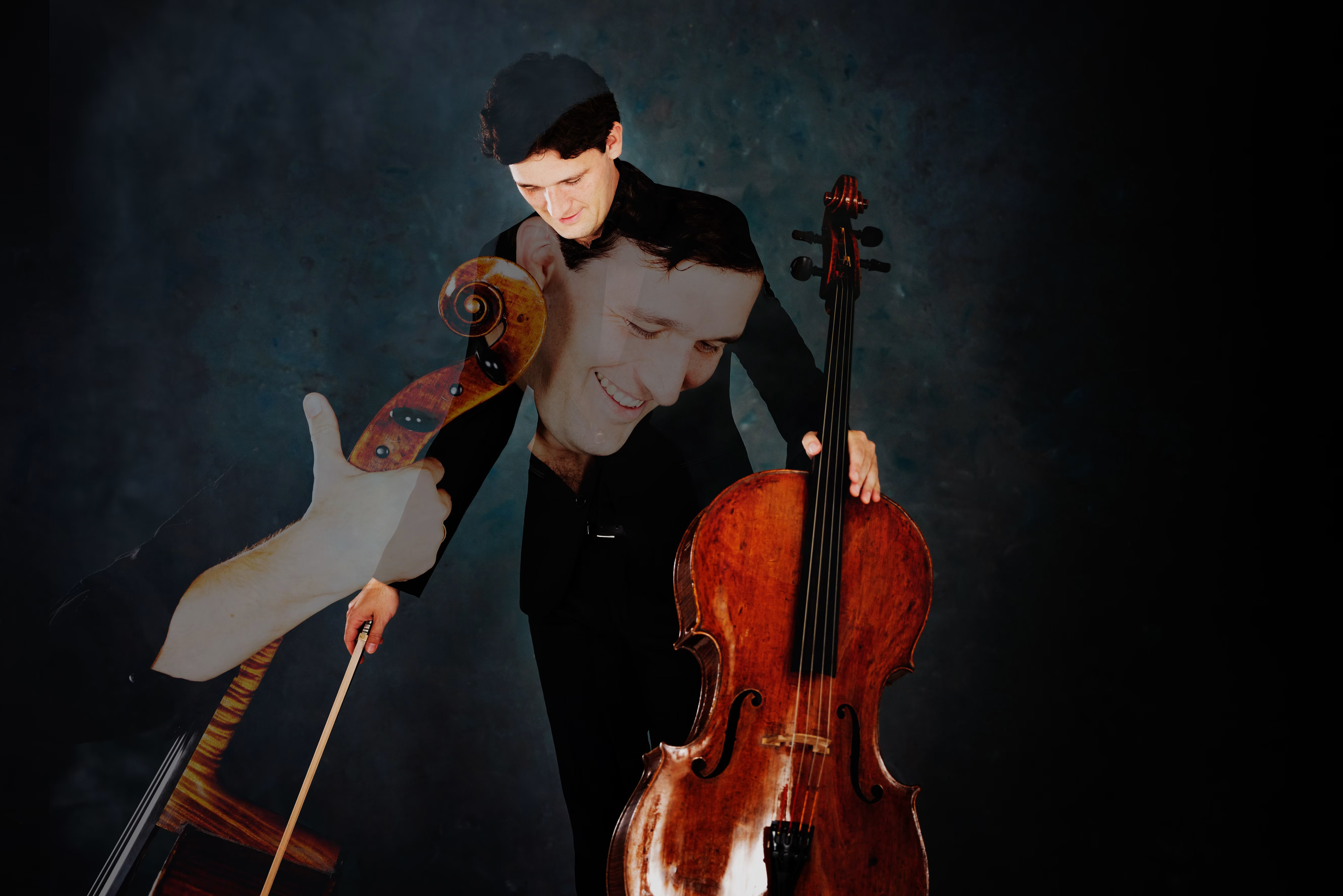
Haydn’s Cello Concerto on 26 June, starring Maximilian Hornung and led by conductor Alan Buribayev is a joyful celebration of what we do best – showcasing new Australian music alongside orchestral favourites.
Here we delve deeper into the three pieces of music that feature in Friday's concert, to help set the scene for a unique and exhilarating night.
The wonder of discovery
'There’s something undeniably intriguing about events that happened and discoveries that were made'.
Friday's concert opens with Australian composer Melody Eötvös’ The Saqqara Bird (commissioned by the TSO), which captures the feeling of mystery and discovery.
In writing the piece, Eötvös was inspired by stories of an 1898 expedition in Egypt, during which a relic of a bird carved from sycamore wood was found.
The artefact baffled archaeologists – what was the purpose of this little bird?
Theories ranged from a children’s toy, a ceremonial object, and even as evidence that the Ancient Egyptians were exploring the mechanics of flight.
It has since been dated to around 200 BCE, but its use is still not known.
In the words of the composer herself, 'This orchestral work places the Saqqara Bird at the intersection of all these theories in an imagined tapestry of the mechanical, the living, and the ancient becoming new again'.
Maybe hearing this piece will help you solve the mystery?
The lost concerto
Like the Saqqara Bird, Haydn’s cello concerto had its own moment of rediscovery.
Apart from mentions in Joseph Haydn’s own personal records, nothing was known about this concerto, assumed lost to history.
That is, until an accidental discovery in 1961.
An archivist at the National Museum in Prague was sorting through some documents collected from an old village in southern Bohemia and came across a set of orchestral parts from the 1760s.
They were signed by Joseph Weigl, who was an accomplished cellist and a close friend and colleague of Haydn.
After several other historical puzzled pieces were connected, the lost concerto was found, after 200 years.
This Friday with the TSO, Haydn’s sunshine-filled second cello concerto will be performed by superstar cellist Maximilian Hornung.
It’s lively and playful, with the cello as the undisputed life of the party.
Big city life
Our evening ends with Robert Schumann’s Symphony No 3, the ‘Rhenish’, which captures the feeling of awe that comes with experiencing new places.
It was composed while Schumann and his family lived in Dusseldorf near the Rhine River in 1850 – he moved there to be the city’s Music Director.
The scenic surroundings inspired all five movements of this symphony, a departure from the traditional four.
A glimpse from Schumann’s wife Clara’s diary shows a subtitle for the second movement, 'Morning life on the Rhine', an obvious ode to the idyllic river.
Cologne’s cathedral is also said to have inspired the composer – its solemn beauty captured in the fourth movement.
A musical postcard of sorts, Schumann’s symphony paints a vivid picture.
Here’s to armchair travel!

.avif)